
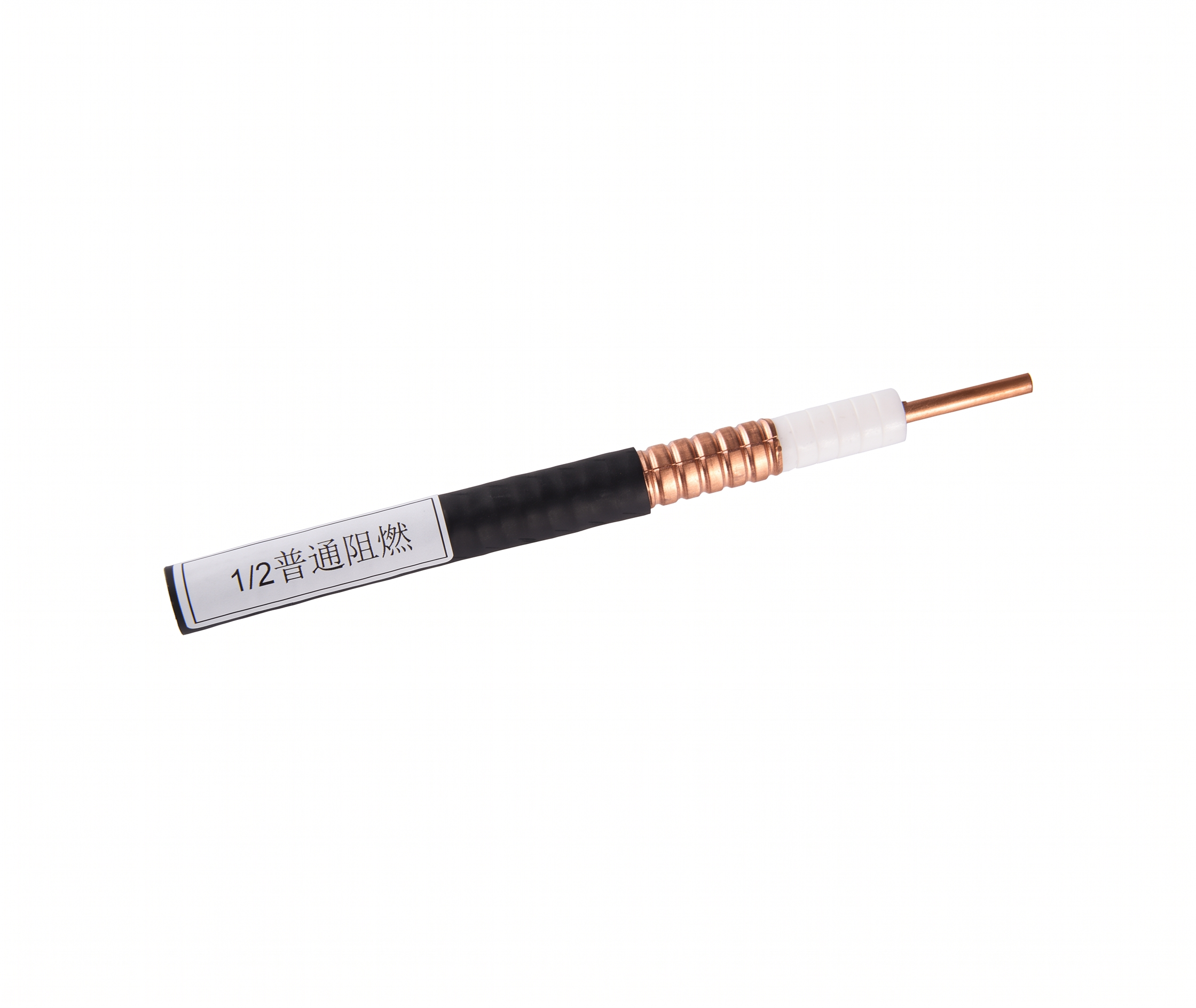
Hefei BRI Electronic & Technology Co., Ltd. is a professional manufacturer of RF passive products, and we are proud to offer our premium 1/2 coaxial cable, strictly designed for modern telecommunication equipment and in-building distributed antenna systems (DAS). This highly flexible 1/2 inch coaxial cable is engineered with a copper-clad aluminum wire inner conductor and an annular corrugated copper tube outer conductor. This structural design guarantees exceptional signal integrity across a wide frequency spectrum, supporting a maximum operating frequency of 8.8 GHz.
Whether deploying a dense indoor antenna network or connecting hardware at a base transceiver station, our coaxial cable 1/2 delivers unmatched, continuous reliability. Featuring an outstanding intermodulation (PIM) rating of <-160dBc (3rd order, 2*20W) and an 86% relative velocity of propagation, this 1/2 coaxial feeder cable actively minimizes signal loss to maximize your network’s efficiency. Supplied with either a standard PE or a flame-retardant FRNC jacket, it readily adapts to rigorous installation environments. Review our comprehensive 1/2 coaxial cable specifications to see why Hefei BRI remains a trusted industry leader.
Technical Specifications Summary
| Feature | Specification |
| Impedance | 50 ±2 Ω
|
| Maximum Operating Frequency | 8.8 GHz
|
| Velocity of Propagation | 86%
|
| PIM (3rd Order, 2*20W) | <-160dBc
|
| Peak Power Rating | 40.0 kW
|
| Capacitance | pF/m
|
| Jacket Material | PE Black or FRNC
|
Frequently Asked Questions (FAQ)
1. What are the most important 1/2 coaxial cable specifications I should review for a DAS installation?
When designing an antenna distributed system, the most critical 1/2 coaxial cable specifications include its impedance ($50\pm2~\Omega$) , its maximum operating frequency (up to 8.8 GHz) , and its Passive Intermodulation or PIM rating (<-160dBc). These metrics ensure the cable can handle high data loads without generating background interference.
2. Why should I choose a 1/2 inch coaxial cable over a thicker 7/8 cable for my project?
A 1/2 inch coaxial cable offers an excellent balance of low signal attenuation and physical flexibility. With a single minimum bending radius of just 55 mm, a coaxial cable 1/2 is much easier to route through tight conduits, ceilings, and walls within complex in-building distributed antenna systems compared to thicker, stiffer cables.
3. What is the difference between the jacket options on your 1/2 coaxial feeder cable?
Our 1/2 coaxial feeder cable is manufactured with two jacket options to meet different safety requirements: PE (Polyethylene) and FRNC (Flame Retardant Non-Corrosive). PE is highly durable and cost-effective for standard or outdoor use, while FRNC is specifically required for indoor installations where strict fire safety and low-smoke emission regulations must be met.
Reviews
There are no reviews yet.