
PASSIVE DAS COMPONENTS SOLUTION
Supply with the devices for indoor and outdoor distributed antenna system.
MAIN APPLICATIONS OF Hefei Bri DAS
In an era where seamless communication is the lifeblood of modern infrastructure, reliable telecommunications networks are more than just a convenience—they are a critical necessity. Hefei BRI Electronic & Technology Co., Ltd. specializes in engineering premium RF passive components that serve as the vital building blocks for robust communication networks worldwide.
Whether establishing flawless coverage in a sprawling corporate campus or ensuring life-saving communications for first responders, the right hardware is crucial for any distributed antenna system to function at peak efficiency. From power splitters and directional couplers to high-performance combiners and dummy loads, our precision-engineered products empower integrators and telecom operators to eliminate dead zones. Below, we explore the primary applications of these critical RF components and how they keep the modern world connected.
1. Commercial Real Estate and Corporate Networks
Modern building materials—such as low-E energy-efficient glass, thick concrete, and heavy steel framing—are notoriously effective at blocking RF signals. This creates frustrating cellular dead zones within office buildings, retail centers, and high-rise apartments.
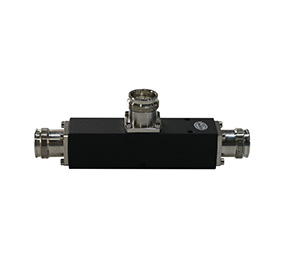
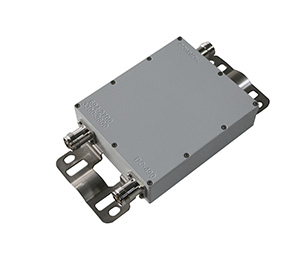
To overcome this structural barrier, network integrators rely on enterprise distributed antenna systems to capture an external cellular signal and distribute it uniformly throughout the building’s interior. At the heart of these in-building distributed antenna systems are high-quality power splitters, tappers, and directional couplers.
These essential passive components ensure that RF signals are precisely divided and routed through coaxial cables with minimal insertion loss and ultra-low Passive Intermodulation (PIM). By utilizing superior RF components, enterprises can guarantee that thousands of employees, visitors, and smart-building IoT devices maintain fast, uninterrupted connections, thereby preserving workplace productivity and enhancing the overall tenant experience.
2. Mission-Critical and First Responder Infrastructure
During a crisis or natural disaster, communication failures are simply not an option. Firefighters, police officers, and medical personnel require absolute certainty that their two-way radios will function perfectly within stairwells, underground parking garages, basements, and thick-walled structures.
This life-saving requirement necessitates the deployment of highly robust emergency distributed antenna systems. Components utilized in a public safety radio distributed antenna system must meet rigorous, code-mandated standards for durability, heat resistance, and power handling.
High-performance duplexers and customized band-pass filters are deployed to isolate specific frequencies and prevent signal interference, ensuring crystal-clear radio traffic. Furthermore, highly reliable dummy loads (termination loads) are absolutely essential to safely absorb excess RF power. This protects the network from damaging signal reflections and ensures that emergency responders stay reliably connected when every second matters.
3. High-Density Public Venues: Airports and Arenas
Concentrated crowds attempting to stream video, upload photos, and share data simultaneously can easily overwhelm standard macro-cellular towers. To handle this immense, localized data traffic, specialized, high-capacity infrastructure like a stadium distributed antenna system is required.
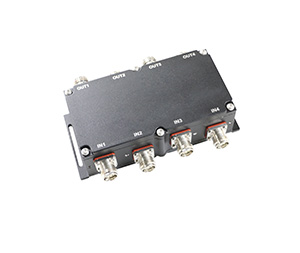
These complex environments almost always utilize a multi carrier distributed antenna system. In these setups, Point of Interface (POI) equipment and hybrid combiners are used to seamlessly aggregate signals from multiple competing telecom operators into a single unified network. This ensures every fan has full network access, regardless of their specific service provider.
Similarly, deploying a cellular distributed antenna system airport framework is vital for modern travel logistics. Millions of global travelers rely on their devices for mobile ticketing, navigation, and personal communication. Precision RF combiners and splitters manage these multiple frequency bands—ranging from legacy 3G to modern 5G—without cross-interference, keeping aviation hubs running smoothly.
4. Expansive Coverage: Outdoor and Passive Networks
While indoor coverage dominates much of the RF engineering focus, wide-open spaces and challenging external environments also require dedicated signal amplification solutions. An outdoor distributed antenna system das is the ideal solution for large corporate parks, university campuses, outdoor entertainment districts, and dense urban zones where traditional cell towers are either structurally restricted or visually undesirable. Weatherproofed, IP67-rated RF components and outdoor antennas ensure these networks can withstand harsh environmental conditions, from heavy rain to extreme temperature fluctuations.
Whether deployed indoors or outdoors, the foundational architecture of many highly reliable and cost-effective networks is the passive distributed antenna system das. Unlike active systems that require powered fiber-optic equipment at remote nodes, a passive DAS relies purely on the physical properties of coaxial cables, splitters, couplers, and tappers to route the signal. Because there are no powered components to fail, passive networks require very little maintenance. However, their overall performance is entirely dependent on the manufacturing quality of the RF components used. Hefei BRI Electronic & Technology Co., Ltd. manufactures these exact components with strict quality control to ensure maximum signal integrity, low VSWR, and extended network longevity.
Partnering for the Future of Connectivity
From high-density arenas to mission-critical public safety networks, premium RF passive components are the silent workhorses of global communication. By integrating high-quality splitters, couplers, filters, and antennas, telecom operators can guarantee flawless connectivity across any environment.
The BRI Advantage: Why Top Integrators Choose Our RF Components for Global Networks
In the telecommunications industry, the difference between a flawless network and a failing one often comes down to the smallest hardware components. Whether you are blanketing a corporate headquarters with 5G or ensuring that first responders have guaranteed radio contact in a concrete basement, the physical backbone of your network dictates its performance.
At Hefei BRI Electronic & Technology Co., Ltd., we have spent over two decades perfecting the engineering behind RF passive components. Our power splitters, directional couplers, hybrid combiners, and termination loads are designed to maximize the efficiency of any distributed antenna system.
When integrators and telecom operators choose BRI Telecom, they aren’t just buying parts—they are investing in network longevity, signal clarity, and operational reliability. Here are the core advantages of integrating our RF components into your next deployment.
1. Ultra-Low PIM and Minimal Insertion Loss
In the world of RF engineering, interference and signal degradation are the enemy. When multiple frequency bands are pushed through a multi carrier distributed antenna system, low-quality components can generate Passive Intermodulation (PIM), which cripples network speeds and creates dropped calls.
BRI’s components are precision-machined to guarantee ultra-low PIM (typically ≤ -160 dBc or better) and exceptionally low insertion loss. This ensures that the maximum amount of signal reaches the broadcasting antennas without distortion. For enterprise distributed antenna systems, this means employees and IoT devices enjoy lightning-fast, uninterrupted data rates. By minimizing power loss at every splitting point, our hardware allows integrators to design highly efficient in-building distributed antenna systems that require fewer active amplification nodes, ultimately saving on overall project costs.
2. Unyielding Reliability for Mission-Critical Life Safety
Standard commercial networks are built for convenience, but a public safety radio distributed antenna system is built for survival. Firefighters, EMTs, and police officers rely on these networks to penetrate thick concrete walls, stairwells, and underground structures during emergencies.
The primary advantage of BRI’s public safety components—such as our heavy-duty duplexers, band-pass filters, and ruggedized dummy loads—is their exceptional thermal stability and high power-handling capacity. Designed to meet strict fire and building codes, our components will not fail under extreme stress. When designing emergency distributed antenna systems, engineers trust our hardware to safely dissipate excess RF energy and prevent catastrophic signal reflections, ensuring that life-saving communications remain crystal clear when they are needed most.
3. Seamless Scalability for High-Density Environments
A network that works perfectly for a thousand people can instantly collapse when confronted with fifty thousand. Designing a stadium distributed antenna system requires hardware capable of aggregating immense amounts of data from multiple telecom operators simultaneously.
Our Point of Interface (POI) systems and wideband combiners are specifically engineered for these high-density environments. They provide high isolation between ports, preventing cross-carrier interference even when operating at peak capacity. This same precise signal management is what makes our components the ideal choice for a complex cellular distributed antenna system airport deployment. We enable aviation hubs to seamlessly blend legacy 3G, robust 4G LTE, and high-speed 5G bands into a single, unified infrastructure that keeps millions of global travelers connected.
4. Rugged Durability for External Deployments
Network coverage doesn’t stop at the building’s edge. Expanding coverage across corporate campuses, remote tunnels, and large entertainment districts requires an outdoor distributed antenna system das.
The clear advantage of our outdoor product line, including our Log Periodic and outdoor panel antennas, is structural resilience. Manufactured with strict IP65/IP67 weatherproofing standards, our outdoor components are sealed against driving rain, blowing dust, and extreme temperature fluctuations. They deliver consistent, targeted RF amplification across vast areas without succumbing to environmental wear and tear.
5. The Ultimate Value of a Passive Network Architecture
While active networks have their place, the fundamental advantage of a passive distributed antenna system das is its cost-effectiveness and virtually zero-maintenance lifespan. Because passive systems use purely physical components—coaxial cables, splitters, and tappers—there are no electronic parts to short-circuit or software to update at the remote nodes.
By utilizing BRI’s premium passive components, integrators can build a “set it and forget it” infrastructure. You get the ultimate combination of high signal integrity and long-term durability, severely reducing operational expenditures (OPEX) over the life of the building.
6. In-House Precision and Global OEM Expertise
Finally, our greatest advantage is our manufacturing process. Operating out of our high-tech facility in Hefei, we utilize a self-owned CNC processing center. This allows us to maintain absolute quality control over every piece of metal we shape. With 24 years of experience and a client base spanning North America, Europe, and Asia, we offer highly customizable OEM and ODM services. If your project requires a custom frequency filter or a specific connector type, our R&D team can design, test, and manufacture it to your exact specifications.
When you partner with Hefei BRI Electronic & Technology Co., Ltd., you are securing the strongest possible foundation for your global connectivity projects.
PRODUCT CATEGORY
BY Hefei Bri Electronic & Technology Co.,Ltd
TO KNOW MORE ABOUT OUR DAS ANTENNA? WE'RE WAITING FOR YOUR CONTACT!
SYMAIR's UPDATES

Dec 10,2025
Differences Between Directional andOmnidirectional Antennas
READ MORE

Dec 02,2025
What Is a Diplexer and Its Role in RF systems?
READ MORE
NoV 24,2025
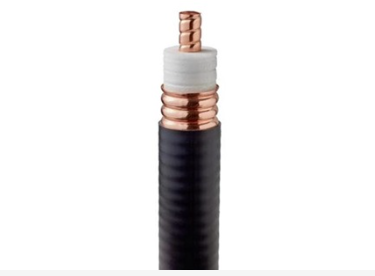
Feeder Cables:Uses in RF systems
READ MORE