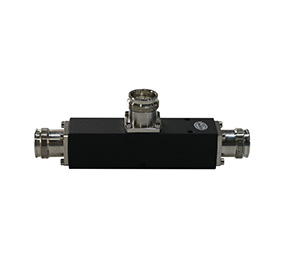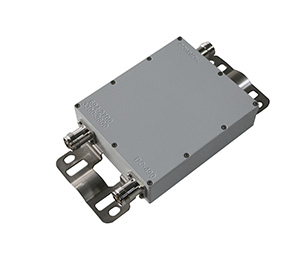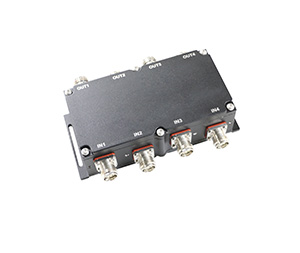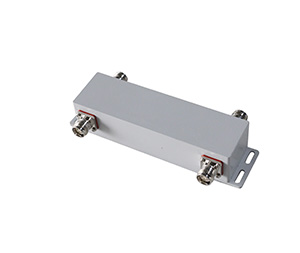
In the world of Distributed Antenna Systems (DAS) and In-Building Wireless (IBW) coverage, selecting the appropriate transmission medium is critical to system performance. At Hefei Bri Electronic & Technology Co., Ltd, we specialize in high-performance RF passive components, and we understand that even the best power splitters or directional couplers are only as effective as the coaxial cables connecting them.
Two of the most frequently compared cables in the industry are LMR-195 and LMR-240. Developed as high-performance alternatives to traditional RG-type cables, these flexible low-loss communications cables are staples in modern telecommunications. This article provides a comprehensive technical breakdown of LMR-195 vs. LMR-240 to help you determine which is best suited for your specific RF application.
1. Understanding LMR-195: Compact and Versatile
LMR-195 is a high-performance coaxial cable designed to replace RG-58. While it shares a similar outer diameter with RG-58 (approx. 4.95mm), its electrical performance is significantly superior due to its physical construction.
LMR 195 Datasheet and Technical Specifications
The LMR-195 cable is engineered for flexibility and low attenuation in a small footprint. Its construction typically involves a solid bare copper-clad aluminum or solid copper inner conductor, a physical foam polyethylene dielectric, an outer shield consisting of an aluminum tape and a tinned copper braid, and a UV-resistant PE or PVC jacket.
| Characteristic | Specification |
| Outer Diameter | 0.195 inches (4.95 mm) |
| Impedance | 50 Ohms |
| Inner Conductor | 0.94 mm (Solid BC) |
| Dielectric | 2.79 mm (Foam PE) |
| Velocity of Propagation | 76% – 80% |
| Capacitance | 24.3 pF/ft (79.7 pF/m) |
| Bend Radius (Installation) | 0.5 inches (12.7 mm) |
| Operating Temp | -40°C to +85°C |
Common Applications of LMR-195
Due to its thin profile and tight bend radius, lmr-195 is the “go-to” cable for short-run installations and cramped environments:
Jumper Assemblies: Connecting RF components within a rack or between an antenna and a localized splitter.
GPS & WLAN: Ideal for WiFi (2.4GHz) and GPS antenna installations where space is a premium.
Mobile Antennas: Frequently used in vehicle-mounted antenna systems where cable routing through narrow pillars is required.
Internal DAS Wiring: Used for short connections within small-cell deployments or internal cabinet wiring.
2. Understanding LMR-240: The Mid-Range Powerhouse
LMR-240 is a step up in size and performance, designed to replace RG-8X. It provides a balanced middle ground between the thin LMR-195 and the much thicker LMR-400.
LMR 240 Cable Specs and Datasheet
The lmr 240 coaxial cable features a larger center conductor and thicker dielectric than the 195, which results in lower signal loss (attenuation) over longer distances.
| Characteristic | Specification |
| Outer Diameter | 0.240 inches (6.10 mm) |
| Impedance | 50 Ohms |
| Inner Conductor | 1.42 mm (Solid BC) |
| Dielectric | 3.81 mm (Foam PE) |
| Velocity of Propagation | 83% – 84% |
| Capacitance | 24.2 pF/ft (79.4 pF/m) |
| Bend Radius (Installation) | 0.75 inches (19.1 mm) |
| Operating Temp | -40°C to +85°C |
Common Applications of LMR-240
The lmr-240 is favored for applications where the run length is too long for LMR-195 but the space is too tight for LMR-400:
In-Building Coverage (DAS): Used for floor-to-floor or room-to-room runs where signal integrity must be maintained across 20-50 feet.
WISP & LTE Links: Connecting outdoor antennas to indoor routers/modems in residential or light commercial settings.
High-Frequency 5G Applications: Its lower loss at higher frequencies (up to 6GHz) makes it suitable for modern sub-6 5G equipment.
Public Safety Networks: Often utilized in bidirectional amplifier (BDA) systems for emergency responder radio coverage.
3. The Comparison: LMR 195 vs. LMR 240
When choosing between lmr 195 and lmr 240, the decision usually hinges on three factors: Physical Size, Flexibility, and Signal Loss.
Physical Dimensions and Ease of Installation
Diameter: LMR-195 is roughly 20% thinner than LMR-240. If you are pulling cable through a conduit that is already near capacity, the 4.95mm diameter of the 195 is an advantage.
Flexibility: LMR-195 has a smaller minimum bend radius (0.5″) compared to LMR-240 (0.75″). This makes the 195 much easier to route around sharp corners or inside small enclosures.
Connector Compatibility
Because LMR-240 is thicker, it requires specific connectors (N-type, SMA, BNC) designed for the 240-size cable. While both cables can support the same connector interfaces, the internal crimp/clamp dimensions are different. It is vital to match your connector specifically to the cable type.
4. Signal Performance: LMR 195 Cable Loss vs. LMR 240 Loss
The most significant technical difference lies in “Attenuation”—how much signal strength is lost as it travels through the cable. Signal loss is measured in Decibels (dB) per 100 feet or 100 meters. As the frequency increases, the loss increases.
Attenuation Table (Typical dB per 100ft / 30.5m)
| Frequency (MHz) | LMR-195 Loss (dB) | LMR-240 Loss (dB) | Improvement with 240 |
| 150 MHz | 4.4 | 3.0 | ~32% lower loss |
| 450 MHz | 7.8 | 5.3 | ~32% lower loss |
| 900 MHz | 11.1 | 7.6 | ~31% lower loss |
| 1800 MHz | 16.0 | 10.9 | ~32% lower loss |
| 2500 MHz | 19.0 | 12.9 | ~32% lower loss |
| 5800 MHz | 29.9 | 20.4 | ~32% lower loss |
Analysis:
On average, LMR 240 offers approximately 30-32% less signal loss than LMR 195. In a 50-foot run at 2.4GHz (WiFi frequencies), using LMR-240 instead of LMR-195 could save you nearly 3dB of signal. In RF terms, a 3dB loss represents a 50% reduction in power. Therefore, for any run exceeding 15-20 feet, LMR-240 is almost always the technically superior choice to ensure maximum coverage and data throughput.
5. Power Handling Capabilities
Another factor often overlooked in DAS design is power handling. Because LMR-240 has a larger center conductor and more surface area, it can dissipate heat more effectively.
LMR-195: Rated for approximately 0.16 kW at 900 MHz.
LMR-240: Rated for approximately 0.26 kW at 900 MHz.
For high-power public safety transmitters or heavy-duty industrial DAS, the extra headroom of LMR-240 provides an essential safety margin and prevents cable degradation over time.
6. Cost vs. Performance Balance
From a procurement perspective, lmr 195 cable is generally less expensive than lmr 240. However, the “cost” of a cable is not just the price per meter—it is the performance of the entire system.
If your system suffers from high loss, you may need to install more expensive active amplifiers or higher-gain antennas to compensate.
Using LMR-240 can often allow for a passive system design (or a simpler one), which reduces long-term maintenance costs.
Summary: Which should you choose?
Choose LMR-195 if:
Your cable runs are very short (under 10-15 feet).
Space is extremely limited, and you need the absolute tightest bend radius.
You are building internal jumper cables for an RF rack.
The application is low-frequency or where signal loss is not a critical factor.
Choose LMR-240 if:
Your cable runs exceed 20 feet.
You are working with high-frequency bands (2.5GHz to 6GHz / 5G sub-6).
System “link budget” is tight, and every dB of signal counts.
The installation is for a permanent In-Building Wireless or DAS infrastructure.
About Hefei Bri Electronic & Technology Co., Ltd
As a leading manufacturer of RF passive products, Hefei Bri Electronic & Technology Co., Ltd provides the high-quality components that pair perfectly with LMR series cables. Whether you are using lmr-240 for a floor-wide DAS or lmr-195 for equipment jumpers, our range of power splitters, couplers, and antennas are designed for low PIM and maximum efficiency.