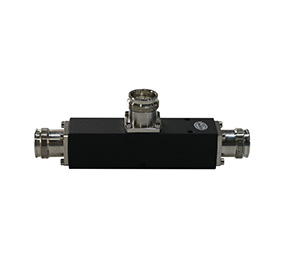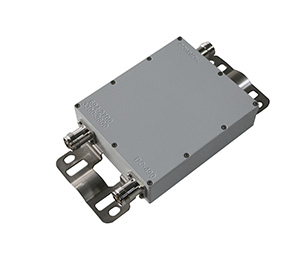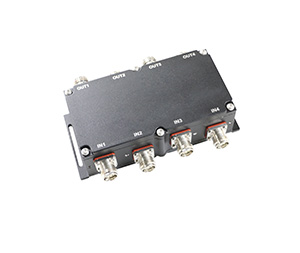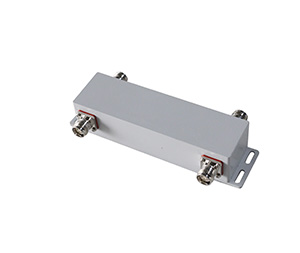
n today’s hyper-connected world, seamless wireless communication is no longer a luxury; it is an absolute necessity. From massive commercial skyscrapers and sprawling university campuses to underground tunnels and sports stadiums, ensuring that cellular and radio signals penetrate every corner of a structure is a monumental engineering challenge. This challenge is met head-on by the Distributed Antenna System (DAS) and Emergency Responder Radio Communication Systems (ERRCS). At the heart of these complex networks lies a critical array of RF passive components—specifically, the RF duplexer, RF diplexer, and RF combiner.
As a leading global manufacturer and supplier, Hefei BRI Electronic & Technology Co., Ltd. (www.brielectronics.com) specializes in the design and production of top-tier RF passive components. With a relentless focus on Low-PIM (Passive Intermodulation) performance and high reliability, we provide the foundational hardware that empowers commercial DAS and public safety networks worldwide.
In this comprehensive, 3500-word guide, we will dive deep into the technical nuances of these vital components. We will explore how they function, where they are best deployed, and how they differ from one another. Whether you are looking for a dual band combiner, a quad band combiner, an rf triplexer, or you are searching for the best duplexer manufactures rf, this article will equip you with the knowledge needed to engineer flawless in-building RF environments.
1. Introduction to Distributed Antenna Systems (DAS) and Public Safety Networks
Before diving into the specific components, it is essential to understand the ecosystem in which they operate. Modern buildings are constructed with materials like Low-E glass, reinforced concrete, and heavy steel. While excellent for thermal efficiency and structural integrity, these materials act as a Faraday cage, blocking outdoor radio frequency (RF) signals from penetrating indoors.
The Role of DAS
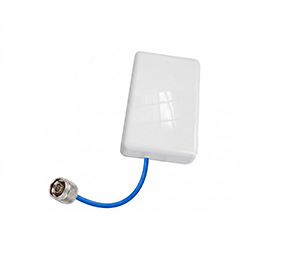
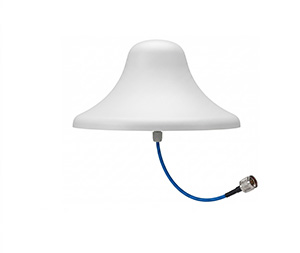
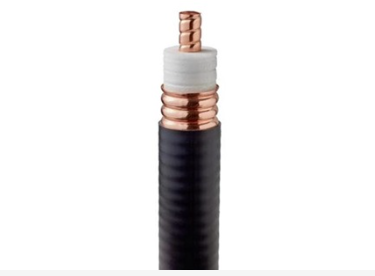
A Distributed Antenna System (DAS) solves this problem by capturing an outdoor signal via a donor antenna, amplifying it through a Bi-Directional Amplifier (BDA) or Base Transceiver Station (BTS), and distributing it throughout the building using a network of coaxial cables, splitters, tappers, and indoor antennas.
Public Safety and ERRCS
While commercial DAS focuses on cellular frequencies (4G LTE, 5G) for consumer devices, an Emergency Responder Radio Communication System (ERRCS) is a life-safety mandate. Governed by strict fire codes (such as NFPA and IFC), an ERRCS ensures that police, fire, and medical personnel can communicate using their two-way radios (VHF, UHF, 700/800 MHz) during a crisis.
To make these systems work efficiently without deploying a chaotic, expensive mess of separate antennas for every single frequency band, engineers rely on RF combiners, diplexers, and duplexers. These passive components allow multiple frequencies, transmitters, and receivers to share the same coaxial infrastructure and antennas without causing catastrophic signal interference.
2. Understanding the RF Combiner
What is an RF Combiner?
As the name suggests, an RF combiner is a device used to merge two or more different radio signals into a single output without causing significant interference or signal loss. The combined signal can then be transmitted through the exact same antenna system.
In RF engineering, the basic principle behind an RF combiner is signal addition. The device takes multiple RF signals and combines them through a network of passive components (like resistors, capacitors, and transformers) into a single transmission line.
When to Use an RF Combiner
An RF combiner is especially suitable for combining signals that are very close in frequency—for instance, combining two UHF repeaters (e.g., DMR systems). Because the frequencies are so close together, simple filtering isn’t enough to merge them without interference, so a combiner uses specialized isolation techniques (such as Wilkinson power combiner topologies or hybrid architectures) to merge the paths.
Key Variations: Dual Band Combiner and Quad Band Combiner
In the context of multi-carrier DAS networks, you will frequently encounter specialized combiners:
- Dual Band Combiner: This device allows operators to combine two distinct frequency bands (for example, a 700 MHz LTE band and a 1900 MHz PCS band) into a single feeder cable. A dual band combiner is a highly cost-effective way to upgrade an existing single-band DAS to support a second carrier or technology without pulling new coaxial cable through the building’s risers.
- Quad Band Combiner: As networks grow more complex with the rollout of 5G, a quad band combiner becomes essential. It merges four distinct frequency bands into one output. This is vital for neutral-host DAS environments where multiple carriers (e.g., AT&T, Verizon, T-Mobile) need to share the same indoor antenna infrastructure.
The Drawback: Insertion Loss
While highly effective, it is important to note that combiners inherently introduce insertion loss (damping). Because they are often combining signals that are close in frequency, the internal resistive components absorb some of the RF power. If the frequency ranges of the systems you are trying to combine differ significantly, there is a more efficient alternative: the RF diplexer.
3. Understanding the RF Diplexer
What is an RF Diplexer?
An rf diplexer is a three-port, frequency-dependent passive device that combines or separates signals. It consists of two different fixed-tuned bandpass filters sharing a common port.
Unlike a standard combiner that might rely on resistive or hybrid summation, an rf diplexer handles signals strictly based on their frequency, regardless of the direction the signal is traveling.
- Combining (Multiplexing): It merges signals from two different transmitters operating at widely different frequencies into a single output.
- Separating (De-multiplexing): In the opposite direction, the internal filters split incoming signals by isolating the different frequencies and directing them only to the appropriate receiver.
When to Use an RF Diplexer
An rf diplexer is the optimal choice when the frequency ranges of the connected systems differ significantly. For example, if you are integrating a commercial mobile telephony system (e.g., 2100 MHz) with a Public Safety TETRA network (e.g., 400 MHz), an rf diplexer is the perfect tool.
Because it uses sharp bandpass filters rather than resistive combining networks, an rf diplexer exhibits significantly lower attenuation (insertion loss) compared to an RF combiner. The filters simply route the high frequencies to one port and the low frequencies to another, resulting in very little wasted energy.
Diplexer Design Topologies
At Hefei BRI Electronic, we engineer our diplexers using various topologies depending on the application:
- Planar Diplexers: These are compact and lightweight, offering excellent integrability into smaller system components. However, they generally have lower power handling capabilities.
- Waveguide Diplexers: Featuring two different bandpass filters and a circulator, waveguide diplexers offer incredibly low insertion loss and high power-handling capabilities. While larger and more expensive, they are often required for high-power base stations and radar systems.
4. Understanding the RF Duplexer
What is an RF Duplexer?
While “diplexer” and “duplexer” sound incredibly similar—and are frequently confused—they serve distinct functions.
An rf duplexer is a specialized three-port device that allows a transmitter (TX) and a receiver (RX) operating on different frequencies to share a single, common antenna with minimal interaction and degradation.
Modern radio equipment, particularly repeaters and Bi-Directional Amplifiers used in DAS and public safety, often have a very small frequency gap between their transmitting and receiving channels. If a powerful transmit signal were to leak into the highly sensitive receiver circuitry, it would completely “deafen” the receiver or permanently damage it.
How RF Duplexers Work
An rf duplexer uses highly selective Notch filters (band-blocking filters) to isolate the transmitting and receiving frequencies.
- The transmit filter prevents the transmitter’s broadband noise from leaking into the receiver’s frequency band.
- The receive filter protects the receiver from being overloaded by the transmitter’s high-power carrier signal.
Therefore, while a diplexer separates signals based on broad frequency bands (e.g., high band vs. low band), an rf duplexer separates signals based on the direction of the communication (uplink vs. downlink) within the same overall band.
High Power RF Duplexer Applications
In commercial macro-towers, military radar, and critical public safety repeaters, a high power rf duplexer is mandatory. These units must handle hundreds of watts of continuous RF power without breaking down, overheating, or generating Passive Intermodulation (PIM).
A high power rf duplexer ensures two-way, full-duplex communication over a single channel. In a radar system, for instance, a duplexer functions as a rapid switch or circulator, isolating the delicate receiver circuitry from the massive power of the radar transmitter, minimizing the space and cost that would be required for two separate antenna arrays.
Finding Reliable Duplexer Manufactures RF
Because of the immense precision required to tune the cavity filters inside a duplexer, selecting the right manufacturing partner is critical. As one of the premier duplexer manufactures rf, Hefei BRI Electronic utilizes state-of-the-art CNC machining, silver-plated cavities, and rigorous tuning processes to ensure our rf duplexers provide maximum isolation (often >80 dB) and minimal insertion loss. We custom-tune our duplexers to our clients’ exact Tx and Rx frequency requirements.
5. Beyond the Basics: The RF Triplexer
As DAS networks evolve to support an ever-increasing number of wireless bands, engineers often need to step beyond diplexers. Enter the rf triplexer.
What is an RF Triplexer?
An rf triplexer is a 4-port filtering device (a type of RF multiplexer) that divides one common input into three distinct outputs, each representing a different frequency band. Conversely, it can route three different frequency signals from three separate transmitters into a single common antenna port.
It is essentially a more advanced version of a diplexer, comprising three distinct bandpass filters.
Where is an RF Triplexer Used?
You will frequently find an rf triplexer in complex multi-band wireless systems. For example, a single broadband antenna on a vehicle or a macro-tower might need to support GPS, WLAN, and Cellular (LTE/5G) simultaneously. The rf triplexer routes the specific frequencies to their respective radio modules.
Using an rf triplexer drastically reduces the physical footprint of the network, saving space, cutting down on coaxial cable costs, and streamlining the visual aesthetics of the installation—which is particularly important in enterprise in-building DAS deployments.
6. Head-to-Head Comparison: RF Duplexer vs. RF Diplexer vs. RF Combiner
To summarize the technical distinctions, let’s look at how these three crucial components stack up against one another.
| Feature | RF Combiner | RF Diplexer | RF Duplexer |
| Primary Function | Merges multiple signals (often in the same band) into one output. | Combines/separates two vastly different frequency bands. | Isolates a Transmitter (Tx) and Receiver (Rx) sharing one antenna. |
| Filtering Mechanism | Resistive networks, transformers, or hybrid couplers. | Wide bandpass filters (High-pass / Low-pass). | Highly selective Notch (band-reject) cavity filters. |
| Frequency Spacing | Excellent for nearby or overlapping frequencies. | Requires significant frequency separation between bands. | Designed for close Tx/Rx frequency spacing within the same band. |
| Insertion Loss | Generally higher (e.g., 3dB per 2-way split/combine). | Very low (often < 0.5 dB). | Low, but depends heavily on the isolation required. |
| Typical Application | Combining two operators on the same band (e.g., two UHF repeaters). | Combining Cellular LTE with Public Safety TETRA onto one cable. | Allowing a Bi-Directional Amplifier to transmit and receive simultaneously. |
The “Instead of” Scenario
Why use these components at all? Instead of using an rf duplexer, a dual band combiner, or an rf diplexer, a network engineer could theoretically just use separate, dedicated antennas and separate runs of coaxial cable for every single signal, carrier, and frequency.
However, doing so increases the complexity of the system exponentially. It requires massive amounts of heavy, expensive coaxial cable. It clutters ceilings with dozens of antennas, ruining building aesthetics. Furthermore, antennas placed too close together will cause destructive RF interference. By utilizing the passive components manufactured by Hefei BRI Electronic, you condense the network, saving immense amounts of capital expenditure (CAPEX) and operational expenditure (OPEX) while actually improving system performance.
7. The Critical Importance of Low PIM in RF Passive Components
When combining multiple high-power RF signals into a single DAS using a dual band combiner, quad band combiner, or rf triplexer, a hidden danger arises: Passive Intermodulation (PIM).
What is PIM?
PIM is a form of signal interference that occurs when two or more carrier frequencies mix together in a non-linear passive component (such as a loose connector, ferromagnetic material, or poorly machined combiner). This mixing creates “ghost” signals—spurious emissions that can fall directly into the uplink (receive) band of the cellular base station.
If the PIM levels are too high, the background noise floor of the network rises. The base station goes “deaf,” resulting in dropped calls, drastically reduced 4G/5G data speeds, and poor battery life for mobile users. In a Public Safety ERRCS network, high PIM can literally cost lives by preventing a firefighter’s distress call from reaching dispatch.
Hefei BRI Electronic’s Low PIM Guarantee
At Hefei BRI Electronic (www.brielectronics.com), we understand that an enterprise distributed antenna system is only as strong as its weakest link. Because there is a global trend toward stricter PIM requirements—especially with the rollout of wideband 5G networks—we exclusively offer Low-PIM components (rated at -161 dBc or better) in our standard portfolio.
Whether you are purchasing an rf duplexer, a power splitter, a directional coupler, or a quad band combiner, our components are manufactured without ferromagnetic materials. We utilize high-grade brass, premium silver plating, and rigorous quality assurance testing to ensure our components maintain pristine signal integrity even under high-power, multi-carrier loads.
8. Designing a Future-Proof DAS with the Right Components
Designing a Distributed Antenna System is an intricate process that requires careful RF planning. Whether you are deploying a Passive DAS, an Active DAS, or a Hybrid DAS, the choice of passive components at the head-end (Point of Interface) is critical.
The Point of Interface (POI)
At the head-end of a DAS, signals from various mobile operators (e.g., Verizon, AT&T, T-Mobile) and public safety repeaters are brought together. This is where components like the quad band combiner and rf triplexer shine.
By using a high-quality multi-network combiner from Hefei BRI Electronic, integrators can safely merge these signals. For instance, you might use a dual band combiner to merge a carrier’s 700 MHz and 2100 MHz feeds, and then use an rf diplexer to combine that cellular feed with a 400 MHz Public Safety feed.
Future-Proofing for 5G
The introduction of 5G technologies utilizing the 3.5 GHz (C-Band) spectrum requires passive components that can support much wider frequency ranges than legacy 3G/4G components.
When selecting an rf duplexer or combiner for a new installation, it is vital to source wideband components. Hefei BRI Electronic provides future-proof passive components rated for frequencies up to 3.8 GHz and 6 GHz, ensuring that when operators upgrade their base stations to 5G, the in-building passive infrastructure does not need to be ripped out and replaced.
9. Why Partner with Hefei BRI Electronic?
The global telecommunications market is flooded with subpar, off-the-shelf RF components that promise high performance but fail under the rigorous demands of a live, multi-carrier network.
Hefei BRI Electronic & Technology Co., Ltd. stands apart as a dedicated manufacturer and supplier of RF passive components tailored specifically for the DAS and Public Safety IBS (In-Building Solutions) markets.
Our Core Advantages:
- Specialized Manufacturing: As premier duplexer manufactures rf, we have the in-house engineering expertise to design and custom-tune rf duplexers, including the demanding high power rf duplexer models required for mission-critical infrastructure.
- Comprehensive Portfolio: We are a one-stop shop. From a standard 2-way power splitter to a complex quad band combiner or rf triplexer, we manufacture the exact topologies required by RF engineers.
- Uncompromising Low PIM (-161 dBc): We do not cut corners. Our materials and manufacturing processes are optimized to eliminate Passive Intermodulation, ensuring your DAS achieves maximum data throughput and carrier approval.
- Wideband 5G Readiness: Our product lines support the latest frequency bands (up to 3.8 GHz and beyond), allowing building owners to invest in infrastructure that will last for decades.
- Global Reach & Customization: We routinely work with global system integrators and OEMs to provide “Build to Spec” tailored solutions. If your project requires a unique frequency isolation profile, our R&D team can deliver.
10. Conclusion
As the boundary between the outdoor macro-network and the indoor wireless environment disappears, the reliance on high-quality Distributed Antenna Systems has never been greater. Guaranteeing reliable 5G cellular coverage for enterprise tenants and ensuring life-saving communications for first responders both rely on the precise manipulation of radio frequencies.
Understanding the distinct roles of the RF combiner, rf diplexer, and rf duplexer is the first step in engineering a successful network.
- Use a dual band combiner or quad band combiner when you need to merge multiple carrier signals together.
- Deploy an rf diplexer or rf triplexer when you need to combine or separate widely spaced frequency bands with virtually zero insertion loss.
- Rely on a high power rf duplexer when your repeater needs to simultaneously transmit and receive on the exact same antenna.
By sourcing these components from a trusted industry leader like Hefei BRI Electronic (www.brielectronics.com), you safeguard your network against PIM, signal degradation, and premature obsolescence.
Ready to optimize your next DAS or ERRCS deployment? Visit www.brielectronics.com today to explore our full catalog of Low-PIM RF passive components, or contact our engineering team to design a custom rf duplexer solution tailored perfectly to your network’s needs.