The Ultimate Guide to Public Safety Distributed Antenna Systems: Navigating the 138-960MHz Band and the Importance of Low PIM RF Passives
By Hefei Bri Electronic & Technology Co., Ltd | www.brielectronics.com
In critical emergencies, communication is the lifeline that separates a successful rescue from an absolute tragedy. When firefighters, police officers, and emergency medical personnel enter a building, their two-way radios must work flawlessly. However, modern building materials like low-E glass, dense concrete, steel reinforcements, and subterranean architectures naturally block external radio frequencies (RF). This creates dangerous “dead zones” where first responders are cut off from their command centers and each other.
To solve this life-threatening issue, fire codes and municipal regulations mandate the installation of public safety distributed antenna systems (often operating under the umbrella of ERRCS, or Emergency Responder Radio Coverage Systems).
At Hefei Bri Electronic & Technology Co., Ltd, we specialize in the design and manufacturing of the critical backbone for these life-saving networks: low pim rf passives. In this comprehensive guide, we will explore the architecture of public safety communications, dive deep into the US public safety frequency bands (specifically the 138-960MHz spectrum), and demonstrate how our specialized 50W Wilkinson Power Splitter ensures flawless, fail-proof communication when lives are on the line.
1. Demystifying Public Safety Distributed Antenna Systems (DAS) and ERRCS
Before exploring the technical intricacies of RF passive components, it is essential to understand the framework in which they operate.
While the term “DAS” (Distributed Antenna System) is widely used to describe networks that enhance general cellular coverage for commercial users (like ensuring you have 5G signal inside a shopping mall), a Public Safety DAS is a vastly different, mission-critical infrastructure.
Public Safety DAS vs. Commercial DAS
As outlined by industry standards, the distinction between ERRCS (Emergency Responder Radio Coverage Systems) and commercial DAS lies in their fundamental purpose, regulatory requirements, and technical rigor:
Commercial DAS: Designed for convenience. Building owners install commercial DAS to ensure tenants and visitors have seamless access to commercial wireless networks (cellular, Wi-Fi). If the system fails, the worst outcome is a dropped phone call or slow internet.
Public Safety DAS / ERRCS: Designed for survival. ERRCS is specifically engineered to cover public safety bands. It is not an optional amenity; it is heavily regulated by local building codes and national standards like NFPA 72 (National Fire Alarm and Signaling Code) and IFC 510 (International Fire Code). These systems must provide stringent signal coverage—typically 99% coverage in critical areas (stairwells, basements, elevator shafts, pump rooms) and 95% in general building areas.
Because Public Safety DAS operates in harsh, life-or-death conditions, every component within the system must be rugged, heat-resistant, water-resistant (IP-rated), and free from signal interference. This brings us to the critical importance of the RF distribution network.
2. The US Public Safety Frequency Spectrum: Navigating the 138-960MHz Band
First responder communications in the United States do not exist on a single, uniform frequency. Instead, they are spread across a wide spectrum depending on the municipality, the agency, and the legacy systems in place. To build an effective and compliant public safety distributed antenna system, integrators must use equipment capable of handling a massive ultra-wideband range.
The 138-960MHz frequency band is widely considered the “sweet spot” for public safety communications, encompassing almost all the critical frequencies utilized by first responders in North America. Let’s break down this spectrum:
VHF (Very High Frequency): 136-174 MHz
Many rural and legacy public safety networks still rely on the VHF band. Because lower frequencies have longer wavelengths, VHF signals travel further over open terrain and penetrate dense foliage effectively. Our passives smoothly handle frequencies starting at 138 MHz, ensuring perfect compatibility with legacy fire and police dispatch networks.
UHF (Ultra High Frequency): 380-512 MHz
UHF is highly popular in urban environments. The shorter wavelengths of UHF signals allow them to bounce around buildings and penetrate urban structures more effectively than VHF. Many city police departments, fire departments, and EMS services utilize the UHF band for localized, clear two-way communication.
The 700 MHz Band (Including FirstNet)
The 700 MHz band is the modern cornerstone of US public safety. Following the digital transition of television broadcasts, this spectrum was freed up and heavily allocated to public safety. Most notably, Band 14 (758-768 MHz and 788-798 MHz) is dedicated to the First Responder Network Authority (FirstNet). FirstNet is a nationwide, high-speed broadband network specifically designed to give priority and preemption to first responders, allowing for data-heavy applications like streaming video from body cams and real-time mapping.
The 800 MHz Band
The 800 MHz band is the standard for localized trunked radio systems. A massive number of municipal emergency radio repeater communication systems operate in the 806-815 MHz and 851-860 MHz ranges. This band provides an excellent balance of building penetration and high-capacity voice traffic.
The 900 MHz Band
Often used for Specialized Mobile Radio (SMR) and some paging systems, the 900 MHz band rounds out the top end of the traditional sub-1GHz public safety spectrum.
Because an in-building ERRCS may need to support a fire department on VHF, a police department on 800 MHz, and EMS on 700 MHz FirstNet simultaneously, the system’s components must be ultra-wideband. This is why Hefei Bri Electronic designed our passive components to perfectly encompass the entire 138-960MHz spectrum.
3. The Threat of Signal Interference: Why “Low PIM RF Passives” are Mandatory
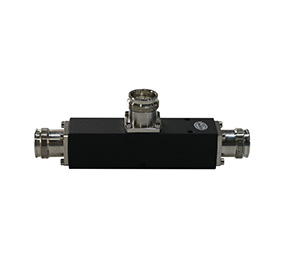
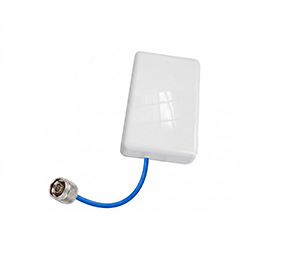
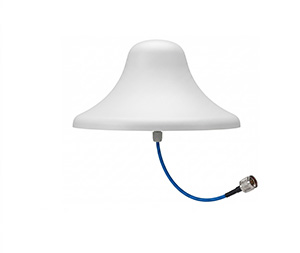
In a public safety distributed antenna system, a signal is captured from the outside via a donor antenna, amplified by a Bi-Directional Amplifier (BDA), and then split and distributed throughout the building via a network of coaxial cables, splitters, directional couplers, and indoor antennas.
Because this system relies heavily on passive components to divide and route the RF power, the quality of these passives dictates the success of the entire network. The greatest enemy of a clear radio signal is Passive Intermodulation (PIM).
What is PIM?
Passive Intermodulation (PIM) occurs when two or more RF signals mix together within a passive component (like a splitter or an antenna) due to non-linearities in the signal path. These non-linearities are usually caused by poor manufacturing, dissimilar metals, rust, loose connections, or magnetic materials.
When these signals mix, they create “ghost” signals—spurious emissions that fall directly into the uplink receive band of the base station.
Why High PIM is Deadly for ERRCS
If a commercial DAS suffers from PIM, a user’s cellular data speed drops. If a Public Safety DAS suffers from PIM, the base station’s receiver becomes blinded by the noise. The system might look fine on a spectrum analyzer testing the downlink (the signal coming into the building), but when a firefighter tries to transmit a distress call out of the building (the uplink), the PIM noise drowns out their voice. The commander outside will hear nothing but static.
For this reason, top-tier system integrators insist on using low pim rf passives. At Hefei Bri Electronic, we manufacture our passive components to strict Low PIM standards, ensuring that our products never become the bottleneck in a life-or-death communication scenario.
4. Product Spotlight: The Hefei Bri Electronic 50W Wilkinson Power Splitter (138-960MHz)
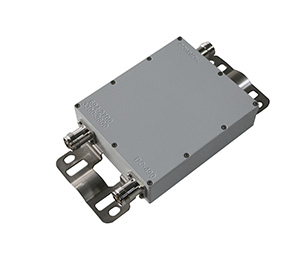
To ensure uncompromised performance across the entire spectrum of first responder networks, Hefei Bri Electronic & Technology Co., Ltd is proud to offer our premium 2-Way Power Splitter (Wilkinson Divider) designed specifically for the 138-960MHz band.
When integrating an ERRCS, engineers need to split the amplified RF signal down different hallways and shafts of a building evenly. A Wilkinson power divider is an industry-standard RF circuit that isolates the output ports from one another, ensuring that an issue (like a damaged antenna) on one port doesn’t reflect power back and destroy the whole system.
Let’s break down the technical specifications of our product and explain exactly why each metric makes it the ultimate choice for your next Public Safety DAS installation:
Unmatched Ultra-Wideband Frequency: 138-960 MHz
As detailed earlier, this frequency range seamlessly accommodates VHF, UHF, 700 MHz (FirstNet), 800 MHz, and 900 MHz systems. Integrators only need to stock one SKU to handle almost any municipal fire code requirement in the United States.
Exceptional Low PIM Rating: ≤ -153 dBc @2*43 dBm
This is the most critical specification for a modern ERRCS. Our splitters guarantee a PIM rating of $-153$ dBc or better (tested with two 20W carriers). This ultra-low PIM rating ensures that the passive component will not generate harmful intermodulation products that could blind the donor site’s receiver. By utilizing high-quality, non-magnetic materials and advanced soldering techniques, we provide absolute signal clarity.
High Isolation: ≥ 20 dB
In a Wilkinson splitter, isolation between the output ports is vital. If a firefighter’s radio is transmitting near one indoor antenna, high isolation prevents that strong signal from bleeding over into the other output port and causing destructive interference. An isolation of $\ge 20$ dB guarantees clean, independent branches within your DAS architecture.
Minimal Insertion Loss: ≤ 3.4dB
In a 2-way splitter, the laws of physics dictate a minimum loss of 3.0 dB just to split the signal in half. Our splitter features an ultra-low total insertion loss of $\le 3.4$ dB. This means the internal circuitry and connectors only add an imperceptible 0.4 dB of loss, maximizing the reach of your RF power and allowing integrators to cover larger areas with fewer amplifiers.
Perfect VSWR: ≤ 1.25
Voltage Standing Wave Ratio (VSWR) measures how efficiently RF power is transmitted from the cable into the splitter. A VSWR of 1.25 indicates that over 98.7% of the power is successfully transferred, with almost zero power reflecting backward. This prevents damage to the Bi-Directional Amplifier (BDA) and maximizes system efficiency.
Excellent Amplitude and Phase Balance
Amplitude Balance: ≤ 0.3dB
Phase Balance: ≤ 3°
These metrics guarantee that the split signal is divided perfectly evenly. Integrators can rely on predictable, mathematically sound RF designs on their floor plans, knowing that port 1 and port 2 will deliver identical performance.
Rugged, Fire-Code Compliant Durability
Public safety environments are unforgiving. Our splitters are built to survive:
Power Handling: 50 Watts (More than enough for the high-power trunking systems used in heavy-duty ERRCS).
IP65 Rating: Dust-tight and protected against water jets. Whether installed in a damp basement or a dusty elevator shaft, the internal circuitry remains protected.
Extreme Temperature Range: -30℃ to +70℃. Our products maintain their electronic integrity in freezing garages and sweltering utility closets alike.
Connectors: N-Female. N-type connectors are the industry standard for low-PIM, high-power RF applications, providing a secure, threaded, weatherproof connection.
5. Why System Integrators Trust Hefei Bri Electronic & Technology Co., Ltd
The market for RF components is crowded, but when life safety is on the line, commodity parts simply aren’t good enough. Hefei Bri Electronic & Technology Co., Ltd (www.brielectronics.com) has established itself as a premier, professional manufacturer of RF passive products specifically optimized for the rigorous demands of public safety distributed antenna systems.
Here is why top-tier ERRCS consultants, engineers, and building owners choose us:
Strict Quality Control & PIM Testing: Every single low pim rf passive that leaves our manufacturing facility undergoes rigorous, individual testing. We do not batch-test; we guarantee the PIM, VSWR, and Isolation specs on every unit.
Deep Industry Expertise: We understand the difference between commercial wireless and public safety. We engineer our products specifically to meet the stringent demands of NFPA and IFC compliance.
Cost-Effective Direct Manufacturing: Because you are buying directly from the manufacturer, you avoid heavy middleman markups without sacrificing mission-critical quality. This allows integrators to bid more competitively on large-scale building projects.
Global Supply Chain Reliability: We know that building occupancy permits (Certificate of Occupancy) are often held up until the ERRCS is fully operational. We pride ourselves on rapid fulfillment and dependable shipping to keep your projects on schedule.
6. Best Practices for Deploying Public Safety DAS
To maximize the performance of our 138-960MHz power splitters, ERRCS integrators should adhere to the following best practices during installation:
PIM Mitigation During Installation: Even the best low pim rf passives can be compromised by poor installation. Ensure all N-connectors are properly torqued to the manufacturer’s specification. Avoid over-tightening or under-tightening, as both can introduce PIM.
Keep Connectors Clean: Dust, metal shavings, and oils from human hands can alter the impedance and introduce non-linearities. Use proper cleaning tools before mating RF connections.
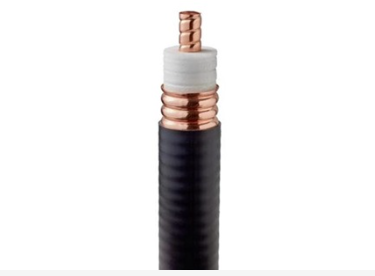
Proper Cable Routing: Use high-quality, low-PIM corrugated coaxial cables (like 1/2″ or 7/8″ plenum-rated cables). Avoid sharp bends that exceed the cable’s minimum bend radius, as micro-fractures in the cable shielding will act as PIM generators.
Waterproofing: While our 50W splitters are IP65 rated, all N-connector junctions should be properly weather-taped using butyl rubber and electrical tape if exposed to high moisture, ensuring the RF path remains perfectly sealed over decades of operation.
7. Conclusion: Partner with Hefei Bri Electronic for Your Next ERRCS Project
As municipal codes become stricter and the reliance on unbroken radio communication for first responders grows, the demand for high-quality public safety distributed antenna systems is skyrocketing. You cannot afford to risk a failed fire inspection or, worse, a communication failure during an emergency, by using inferior, high-PIM splitters.
By utilizing the Hefei Bri Electronic 50W Wilkinson Power Splitter (138-960MHz), you are choosing a component engineered for perfection, designed to pass stringent NFPA testing, and built to ensure that when a first responder calls for backup, their message is heard loud and clear.
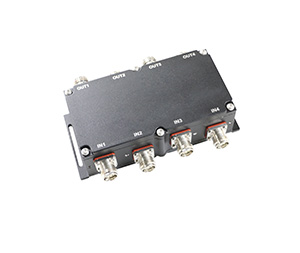
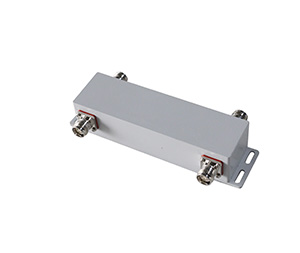
Would you like me to connect you with our engineering team to provide a customized quote and sample unit for your next in-building public safety ERRCS project? Visit us at www.brielectronics.com to explore our full catalog of premium Low PIM RF passives, directional couplers, and hybrid combiners.