As the global telecommunications landscape accelerates into the 5G era, network operators and infrastructure providers are facing an unprecedented challenge. Cell towers and rooftops are becoming incredibly congested. Today’s infrastructure must support legacy 2G, 3G, and 4G networks, usher in ultra-high-capacity 5G frequencies, and simultaneously ensure the flawless operation of mission-critical public safety wireless systems.
Solving this spatial and spectral puzzle requires innovative RF solutions. Enter the next evolution of tower infrastructure: our cutting-edge dual band combiner, specifically engineered to bridge the gap between low-frequency critical communications and ultra-fast next-generation commercial networks.
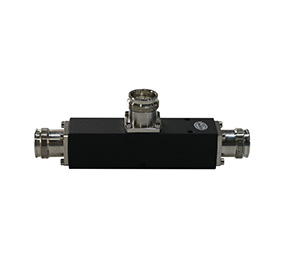
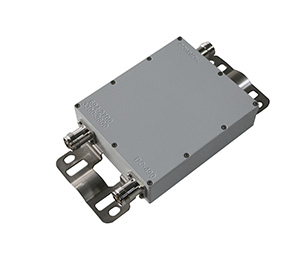
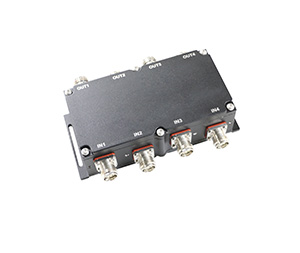
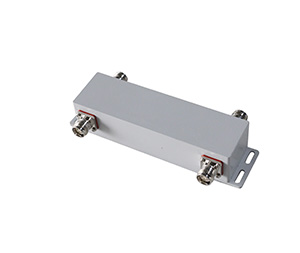
This article explores the technical advancements of our new DC-490MHz / 694-2700 & 3300-3800MHz Dual-band Diplexer , the BRC2-DC3800-B. We will compare its capabilities against traditional combiners, detail its unique port configurations, and explain why it is the ultimate solution for any modern base transceiver station.
The Core Challenge at the Base Transceiver Station
In a traditional base transceiver station (BTS), adding new frequency bands historically meant adding new antennas, new coaxial cable runs, and entirely separate RF conditioning equipment. This approach is no longer sustainable. Tower loading limits—both in terms of physical weight and wind shear—are strict. Furthermore, leasing additional space on commercial towers is prohibitively expensive.
A dual band combiner (or diplexer) solves this by allowing two distinct frequency bands to share the same feeder cable and antenna system. However, traditional combiners have historically been limited in their bandwidth scope. A legacy combiner might efficiently combine 800MHz and 1900MHz for basic LTE, but it would completely block out the sub-500MHz frequencies used for emergency services, or the high-band 3.5GHz spectrum required for 5G.
To support the simultaneous operation of public safety networks alongside commercial 5G without interference, a massive technological leap in filter design was required.
Introducing the BRC2-DC3800-B Dual-Band Diplexer
Our latest solution, the BRC2-DC3800-B, is engineered to eliminate the bottlenecks of traditional RF design. It is a highly advanced DC-490MHz / 694-2700 & 3300-3800MHz Dual-band Diplexer that consolidates a massive swath of the electromagnetic spectrum into a single, compact unit.
Designed specifically with modern infrastructure in mind, this diplexer is optimized for 4G/5G macro and small cell deployments. It features a future-proof frequency range tailored for next-generation wireless technologies.
Key Specifications at a Glance:
Model: BRC2-DC3800-B
Port 1 Frequency: DC to 490MHz
Port 2 Frequency: 694 to 2700 MHz & 3300 to 3800 MHz
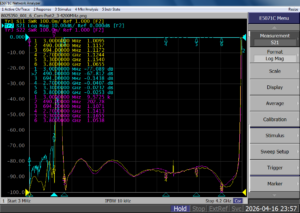
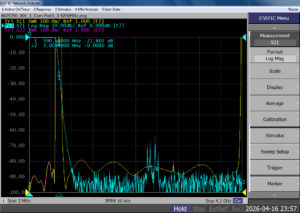
Insertion Loss: < 0.3dB
Return Loss: >= 19dB
Isolation: >= 50dB
Input Power: 200 W (average)
Impedance: 50 Ohms
By combining these highly disparate frequency bands with an incredibly low insertion loss of less than 0.3dB, network operators can ensure that neither their mission-critical signals nor their broadband data streams suffer from degradation.
Port 1: Empowering Public Safety Wireless (VHF/UHF/Tetra)
To understand the true value of this dual band combiner, we must look at the specific frequencies it manages. Port 1 is dedicated to the ultra-low frequency range, operating from DC to 490MHz.
The Traditional Limitation
Traditional cellular combiners rarely drop below the 600MHz or 700MHz threshold. This is because cellular networks (starting heavily with 4G LTE) primarily occupy the 700MHz to 2.5GHz space. Because of this, traditional cellular equipment is completely blind to the frequencies utilized by first responders, police, fire departments, and municipal dispatchers.
The New Paradigm
Public safety wireless networks operate almost exclusively in the VHF (Very High Frequency, typically 136-174 MHz) and UHF (Ultra High Frequency, typically 380-512 MHz) bands. Additionally, TETRA (Terrestrial Trunked Radio)—the global standard for emergency services communication—operates heavily within the 380-430 MHz spectrum.
By designing Port 1 to support DC to 490MHz, the BRC2-DC3800-B allows these critical VHF, UHF, and TETRA signals to seamlessly pass through the same infrastructure as commercial cellular data. This is revolutionary for site-sharing. A municipality can now install a public safety antenna system and share the exact same feeder lines with a commercial cellular carrier, drastically reducing installation costs and tower clutter.
Furthermore, Port 1 includes a DC By-pass capable of handling a maximum of 3000mA. This allows Tower Mounted Amplifiers (TMAs) or active antennas to receive power directly through the coaxial line, ensuring that remote, mast-mounted equipment for public safety networks remains powered and operational without requiring separate, dedicated power cables.
Because public safety infrastructure must survive extreme events, the unit is fortified with robust lightning protection, rated for a 10KA (10/350us pulse) strike. When a storm hits, emergency communication lines will remain open.
Port 2: Unlocking the Full Potential of 5G and LTE
While Port 1 handles the critical low bands, Port 2 acts as the ultra-wideband superhighway for commercial cellular traffic. Port 2 operates across two massive frequency blocks: 694 to 2700 MHz, and 3300 to 3800 MHz.
The Traditional Limitation
Traditional multiband combiners for LTE generally tapped out around 2100MHz or 2600MHz. As 5G rolled out, it utilized a new frequency block known as “C-Band” (roughly 3.3GHz to 4.2GHz globally). Older combiners physically cannot pass these high frequencies, forcing operators to install entirely parallel RF architectures just to add 5G to an existing 4G cell tower.
The New Paradigm
Our dual band combiner is inherently future-proofed. The inclusion of the 694-2700 MHz band ensures that all existing commercial wireless standards—from legacy 2G/3G GSM/CDMA networks to modern high-capacity 4G LTE bands—are fully supported.
More importantly, the inclusion of the 3300-3800 MHz band natively supports mid-band 5G (often referred to as Sub-6GHz 5G). Mid-band 5G is the “sweet spot” for modern cellular networks, offering a perfect balance between ultra-fast gigabit download speeds and broad geographic coverage.
By pushing both legacy 4G and ultra-fast 5G through Port 2, and seamlessly isolating it from the public safety traffic on Port 1, this diplexer serves as the ultimate convergence point for a modern base transceiver station. The unit ensures strict signal integrity between these varying technologies, boasting an impressive isolation rating of >= 50dB. This means that the high-power, high-throughput 5G data bouncing through Port 2 will not bleed over and create noise in the life-saving TETRA communications routing through Port 1.
The Critical Importance of Low PIM RF Passives
When routing multiple high-power RF signals through a single passive component, operators face the threat of Passive Intermodulation (PIM). PIM occurs when two or more signals mix together within a passive component (like a diplexer or a connector) and generate ghost signals (intermodulation products) that interfere with the tower’s sensitive receivers.
In the 5G era, where receivers are more sensitive than ever and modulation schemes (like 256-QAM) are incredibly complex, even the slightest amount of PIM can severely degrade network performance, drop data rates, and cause dropped calls.
This is why modern base transceiver stations require strictly low pim rf passives. Our dual band combiner excels in this metric, guaranteeing an intermodulation rating of <= -160dBc measured at 2*43dBm. This ultra-low PIM rating ensures high isolation, low loss, and excellent intermodulation stability.
Achieving this level of PIM performance requires flawless internal cavity design, high-quality plating, and exact mechanical tolerances. It also heavily relies on the interface connections. While older architectures relied on bulky 7/16 DIN connectors that were prone to torque issues and PIM generation over time, modern high-performance passives utilize the 4.3-10 connector. The 4.3-10 connector design inherently separates the electrical contact from the mechanical load, ensuring that even if the cable moves in high winds, the PIM performance remains remarkably stable. Integrating components with these modern interfaces is non-negotiable for achieving the <= -160dBc standard required by 5G networks.
Built for the Elements: Mechanical and Environmental Superiority
A base transceiver station is only as reliable as its weakest physical component. Traditional combiners were often bulky and highly susceptible to moisture ingress, requiring them to be housed in environmentally controlled cabinets at the base of the tower. This increased the length of the coaxial cable runs, subsequently increasing insertion loss and reducing overall system efficiency.
The BRC2-DC3800-B is engineered for versatility and resilience. It features a compact, durable IP66 design suitable for demanding installations. Being IP66 rated means it is entirely dust-tight and protected against heavy seas or powerful jets of water, making it perfectly suited for both indoor and outdoor environments.
Despite its massive bandwidth handling capabilities, it maintains a remarkably sleek footprint. The package dimensions are just 263 x 183 x 99 mm , and it weighs a mere 1.85kg (1.65kg net). This lightweight, compact form factor is a stark contrast to the heavy, cumbersome metal boxes of the past. It comes with wall and mast mounting options as part of the delivery (via a clamp option), allowing engineers to install it directly beneath the antenna on the mast, reducing cable lengths and maximizing the RF power that actually makes it into the air.
Furthermore, it is built to survive extreme climates, boasting an operation temperature range of -40°C to +65°C and a storage temperature range of -40°C to +80°C. It can operate flawlessly in relative humidity ranging from 5% to 95%.
Finally, to assist with modern remote-managed networks, the unit features seamless AISG (Antenna Interface Standards Group) integration. This allows the baseboard network controllers to remotely communicate with and control active tower components (like Remote Electrical Tilt antennas) by passing the AISG data signals directly through the diplexer along with the DC power.
Conclusion
The evolution of telecommunications requires hardware that can do more with less space. The era of building segregated tower infrastructures for legacy cellular, public safety wireless, and 5G is over.
The BRC2-DC3800-B represents the pinnacle of RF engineering. By seamlessly combining DC-490MHz for critical VHF/UHF/Tetra communications with 694-2700 & 3300-3800MHz for high-speed 4G and 5G, it solves the immediate site-sharing challenges faced by network operators globally.
Backed by ultra-low PIM performance (<= -160dBc) , rugged IP66 weatherproofing , and an incredibly compact design, this dual band combiner is not just an upgrade—it is a foundational component for the next generation of base transceiver stations. It ensures that as our commercial networks become faster, our emergency and public safety networks remain reliable, completely uninterrupted, and structurally unified.