The rapid growth of wireless communication has been fueled by continuous technological innovation, especially in the fundamental methods used to share limited radio spectrum among multiple users. Among the most significant multiple access techniques in cellular history are Code Division Multiple Access (CDMA) and Orthogonal Frequency Division Multiplexing (OFDM), with its multi-user extension, Orthogonal Frequency Division Multiple Access (OFDMA). While CDMA was the breakthrough technology for 3G, OFDMA has become the dominant architecture for 4G LTE and 5G NR, effectively replacing its predecessor for broadband data. This article will explore the history of CDMA, the challenges it faced as data demands surged, and how OFDM and OFDMA’s unique characteristics address these demands, propelling them to the forefront of modern wireless design.
CDMA: Dominating 3G Voice
History: Code Division Multiple Access was first developed and deployed for military purposes during World War II, primarily for secure, spread-spectrum communication resistant to jamming and eavesdropping. In the late 1980s and early 1990s, the technology was commercially developed for cellular applications, largely pioneered by companies like Qualcomm. It emerged as a competitive multiple access scheme for 2G, standardizing as IS-95, and became the foundation for the primary globally deployed 3G standards, including Wideband CDMA (W-CDMA, used in UMTS) and CDMA2000.
Core Concept: Unlike previous techniques like Frequency Division Multiple Access (FDMA) which separates users by frequency bands, or Time Division Multiple Access (TDMA) which separates users by time slots, CDMA allows all users to transmit simultaneously over the entire available frequency band. Each user’s data is spread across the spectrum using a unique, orthogonal mathematical code. The receiver, possessing the corresponding code, can then despread and extract only that specific user’s signal, effectively treating all other simultaneous transmissions as low-level noise. Imagine a room full of people speaking different languages simultaneously; if you understand only one language, you can tune in and comprehend that speaker, filtering out the background chatter.
Advantages for Voice/Early Data: In the voice-centric and early mobile data eras, CDMA offered significant advantages over TDMA and FDMA:
High Spectral Efficiency: It could accommodate more users within a given bandwidth, especially for voice traffic.
Improved Voice Quality: Techniques like dynamic power control, critical for preventing nearby signals from drowning out distant ones, and rake receivers (which exploit multipath propagation) improved link reliability and voice clarity.
Robustness: Spread-spectrum signals are inherently resistant to interference.
Soft Handoff: Seamlessly transitioning calls between cell sites by communicating with multiple towers simultaneously enhanced call stability.
Challenges of CDMA in the Broadband Age
As the 21st century progressed, user demands shifted dramatically from primarily voice calls to data-intensive applications like high-quality video streaming, large file downloads, and real-time gaming. This transition to mobile broadband posed significant, ultimately insurmountable technical challenges for the further scaling of CDMA technology.
1. Scalability and Wide Bandwidths: Pushing CDMA to higher data rates requires significantly wider frequency bands. However, as the signal bandwidth increases, managing the complex orthogonal codes and the extreme dynamic power control required across numerous users becomes exponentially more difficult and computationally expensive.
2. Multipath Interference and Intersymbol Interference (ISI): The primary technical bottleneck at wide bandwidths is frequency-selective multipath fading. Signals transmitted outdoors bounce off buildings and landscapes, reaching the receiver multiple times with slightly different delays. In CDMA, high data rates mean shorter symbol periods. When the delay spread between multipath signals becomes significant relative to the symbol time, symbols begin to overlap and interfere with each other, causing Intersymbol Interference. Combatting ISI at broadband speeds requires increasingly complex Rake receivers in CDMA, making them computationally intensive and difficult to implement efficiently at the gigabit speeds required for modern networks.
3. Complexity and Cost: Achieving multi-megabit or gigabit speeds with CDMA would necessitate overwhelming hardware and software complexity, increasing cost, power consumption, and thermal challenges in both base stations and mobile devices. The industry recognized that a more suitable, fundamentally scalable architecture was required to deliver on the promise of mobile broadband.
Enter OFDM and OFDMA: The Broadband Solution
What is OFDM? (Orthogonal Frequency Division Multiplexing)
Orthogonal Frequency Division Multiplexing is a advanced digital modulation technique, not a direct multiple access scheme, but rather the foundation upon which OFDMA is built. OFDM addresses the broadband challenges of CDMA by employing a fundamentally different approach.
Core Concept: Instead of spreading a single high-speed data stream across a wide band (like CDMA), OFDM splits that high-speed stream into hundreds or even thousands of separate, low-speed parallel data streams. Each low-speed stream is then modulated onto its own narrow, orthogonal subcarrier, and all these subcarriers are transmitted simultaneously and overlap in frequency.
Key Characteristics:
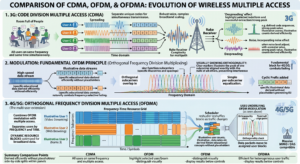
Orthogonality: This is the magic. The subcarriers are spaced very precisely such that the peak of each subcarrier aligns with the mathematical null points of all other subcarriers, preventing interference between them despite overlapping spectrum. This visual is clearly shown in the comparative diagram below. Simplified digital processing via Fast Fourier Transform (FFT) and Inverse Fast Fourier Transform (IFFT) makes implementing this orthogonality computationally efficient in modern hardware.
Combating Multipath naturally: Because each low-speed subcarrier transmits data over a very narrow frequency band, it primarily experiences flat fading (meaning all frequencies within that narrow band are affected equally). This is much easier to equalize than the complex frequency-selective fading experienced by a wideband CDMA signal, simplifying receiver design for broadband applications.
Cyclic Prefix (CP): A crucial element in OFDM systems, the Cyclic Prefix is a guard time interval added to the beginning of each symbol. It is essentially a copy of the end of the symbol, allowing delay spreads from multipath to settle before processing, effectively eliminating ISI and converting a frequency-selective channel into numerous independent flat-fading subchannels in the frequency domain. This further simplifies equalization and boosts performance.
What is OFDMA? (Orthogonal Frequency Division Multiple Access)
Orthogonal Frequency Division Multiple Access is the multiple access scheme based on the underlying OFDM technology. If OFDM is the modulation technique that enables high-speed data transmission by splitting it into orthogonal subcarriers, OFDMA is the mechanism used to efficiently share those subcarriers among multiple users.
Core Concept: In OFDMA, the large pool of available subcarriers is dynamically allocated across users, not just in frequency, but also in time. Individual users are assigned specific sets of subcarriers for specific time intervals (resource blocks), allowing multiple users to access the network simultaneously with varying data rates. This is typically implemented within a large frequency-time resource grid, as visually detailed in our illustration. OFDMA can operate in both Frequency Division Duplex (FDD – separate uplink/downlink bands) and Time Division Duplex (TDD – uplink/downlink share same band via time slots) modes, prevalent in 4G and 5G networks.
Key Characteristics:
Efficient and Dynamic Resource Allocation: The dynamic allocation of subcarriers and time slots allows OFDMA systems to manage diverse user requirements and optimize spectrum utilization.
Support for Heterogeneous Traffic: Users with different data needs (e.g., streaming video vs. simple browsing) can be efficiently accommodated by allocating varying amounts of resources accordingly.
Frequency-Selective Scheduling: By understanding channel quality on different subcarriers for different users, network operators can schedule transmissions on the best available subcarriers for each specific user, maximizing overall network throughput and efficiency.
Why OFDMA is Replacing CDMA
The technological transition from CDMA to OFDMA wasn’t arbitrary; it was driven by fundamental performance, scalability, and economic factors in the face of skyrocketing broadband data demands.
1. Broadband Scalability: The paramount reason for OFDMA’s dominance is its inherent scalability to wide bandwidths. OFDM, with its division into narrow, manageable subcarriers and use of the Cyclic Prefix, elegantly and efficiently overcomes the multipath and ISI challenges that cripplingly restrict wideband CDMA performance at high data rates. OFDMA systems can readily manage bandwidths from 1.4 MHz up to massive 100 MHz blocks and beyond in modern 5G networks, maintaining high performance and efficient receiver design, impossible for single-carrier wideband CDMA systems.
2. Superior Spectral Efficiency for Data: While CDMA was very efficient for voice, OFDMA with dynamic, frequency-selective scheduling, advanced modulation schemes (like 64QAM or 256QAM) and flexible resource allocation, achieves significantly higher spectral efficiency (more bits per Hertz) for data traffic, squeezing more capacity out of valuable spectrum for modern mobile applications.
3. Lower Computational Complexity and Cost at High Speeds: For wideband channels and high data rates, the computationally intensive Rake receivers required in CDMA systems are much less practical and efficient than the Fast Fourier Transform (FFT) based processing used in OFDMA. FFT/IFFT is inherently parallel and computationally efficient, making high-speed OFDMA receivers much simpler and more cost-effective to implement in silicon, facilitating widespread deployment in both base stations and user equipment.
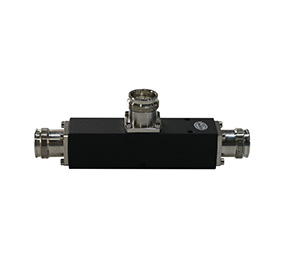
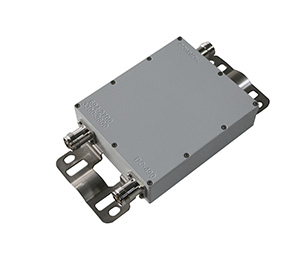
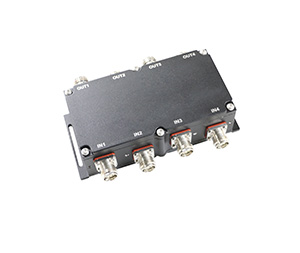
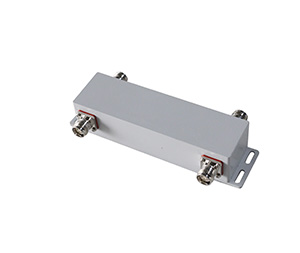
4. Ecosystem Synergies and Support for Advanced Technologies: * MIMO and Beamforming: OFDMA naturally integrates with advanced antenna technologies. The independent flat-fading subchannels of OFDM are ideally suited for leveraging techniques like Multiple-Input Multiple-Output (MIMO, including advanced 4×4 MIMO antennas), massive MIMO, and dynamic beamforming, which dramatically boost network capacity and reliability. These are fundamental components of 4G and 5G networks, leveraging the multi-antenna concepts often deployed through designs like Distributed Antenna Systems (DAS). Effective implementation of DAS and similar infrastructure, often utilizing components like passive RF combiners for efficient combining of RF signals, further enhances indoor and dense-urban coverage for these advanced OFDMA-based networks. * Global Industry Consensus: Recognizing these technical advantages, the global wireless industry, standards bodies (like 3GPP), and major technology companies globally coalesced around OFDMA for both 4G LTE and 5G NR. This consensus fueled massive global investment, innovation, and a vibrant ecosystem that CDMA simply lacks for continued broadband development, ensuring continued performance improvements and cost reductions for OFDMA networks well into the future. Modern 5G networks utilize OFDMA across diverse spectrum, from lower bands like the 5G 700MHz band to much higher millimeter-wave spectrum, managing these frequencies effectively.
Comparative Visualization: CDMA vs. OFDM & OFDMA
To truly grasp the fundamental differences and why OFDMA provides a superior architecture for broadband, let’s look at how resources are allocated in each technology.
Comparative Illustration Description: The top section, CDMA (Code Division Multiple Access), visualizes a time-domain view. Here, multiple users (illustrative User 1 – English waveform, User 2 – Spanish waveform, User 3 – Mandarin waveform) are shown simultaneously transmitting within the same frequency band. While the time graph shows a complex, combined signal over time, the codes used represent distinct illustrative orthogonal code patterns corresponding to each user’s data (English text, Spanish text, Mandarin text symbolically spread), with an illustrative visual example shown for each code pattern. Small icons for users/phones/antennas populate illustrative data. Arrows and explanatory text boxes within the section detail: “Same frequency, different unique codes for all users simultaneously.” and mention “Delay Spread / Rake Receiver Complexity limitation.” Illustrative data points include representative codes with specific patterns, illustrative time intervals, populating with distinct, not placeholder, data.
The bottom section, OFDM & OFDMA, illustrates a frequency-domain and resource grid view, using distinct color palettes.
OFDM (Modulation – Single User Example) (bottom left) shows a single user’s high-speed data stream split into multiple parallel low-speed subchannels. Multiple overlapping sinc function subcarriers are shown in the frequency domain, with illustrative, not generic, data points (e.g., specific subcarrier frequencies, illustrative counts/spacings). VISUALLY SHOWING ORTHOGONALITY: the peak of one subcarrier aligns with nulls of others. A key text box explains: “Orthogonal subcarriers overlap in frequency domain, naturally combats frequency-selective fading.”
OFDMA (Multiple Access – User Allocation Example) (bottom right) illustrates the resource grid, Frequency vs. Time. Multiple users (illustrative User A – yellow, User B – purple, User C – orange) are dynamically allocated specific subcarriers and time slots. The grid visually groups illustrative resource blocks for each distinct user across both frequency and time, populating with specific illustrative data points (e.g., representative user names, illustrative number of subcarriers/timeslots). A key text box explains: “Dynamically allocates subcarriers and time slots to multiple users efficiently.” Small data packet icons move along beams, and illustrative data flows are distinct and varied. The overall comparison point infographic visually highlights “Efficient Broadband Scalability” for OFDMA vs. “Complexity at High Speed” for CDMA. All labels are clear, modern illustrative vectorized graphics style with subtle glowing signal effects, no horizontal splits in composition just composite diagram description.
In conclusion, while CDMA played a revolutionary role in the development of third-generation mobile systems, its technical limitations in handling wide bandwidths, mitigating complex multipath interference, and scaling to gigabit data rates became evident in the broadband age. OFDMA, based on the mathematically elegant and computationally efficient OFDM modulation technique, provides a fundamentally superior architecture. By dividing wide channels into numerous orthogonal subcarriers, OFDMA naturally combats frequency-selective fading, dynamically allocates resources efficiently, and integrates seamlessly with advanced technologies like MIMO and beamforming. This scalability, performance, and computational efficiency are the driving forces behind OFDMA’s global adoption for 4G LTE and 5G NR, cementing its position as the engine powering today’s mobile broadband revolution and future wireless innovations across diverse spectrum bands including important lower frequency options like the 700MHz 5G band.