
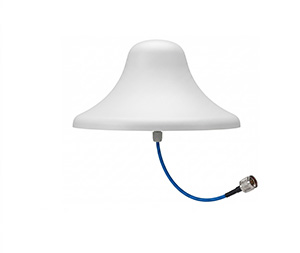
380-3800MHz Indoor OMNI Ceiling Antenna (BRA380-3800V05A360A)
Engineered for seamless integration into passive Distributed Antenna Systems (DAS), the BRA380-3800V05A360A is a premium indoor ceiling-mount omnidirectional dome antenna. Manufactured by Hefei Bri Electronic & Technology Co.,Ltd, this high-performance siso ceiling antenna delivers a true 360-degree horizontal beam width for vast indoor coverage.
Providing highly stable operation across the 380-520 MHz, 698-960 MHz, 1710-2700 MHz, and 3300-3800 MHz frequency bands, it serves as an exceptional tetra radio antenna for public safety and standard cellular distribution. The unit guarantees strict signal integrity with a low passive intermodulation (IM3) rating of ≤-153dBc@2*43dBm and utilizes a vertically polarized transmission approach to maximize connection reliability with mobile user equipment.
Technical Specifications
| Specification | Details |
| Model | BRA380-3800V05A360A |
| Frequency Range (MHz) | 380-520 / 698-960 / 1710-2700 / 3300-3800 |
| Polarization | Vertical |
| Gain (dBi) | 2.0±1.0 / 2.5±1.0 / 5.0±1.0 / 5.0±1.0 |
| VSWR | ≤2.0 |
| Intermodulation IM3 | ≤-153dBc@2*43dBm |
| Impedance | 50 Ω |
| Maximum Input Power | 50 W |
| Connector Type | 4.310/-Female (with cable) |
| Dimensions | φ298*152 mm |
| Operating Temperature | -55~60 °C |
Technical Guide: Antenna Design and RF Polarization
Understanding Ceiling Antennas vs. Panel Antennas
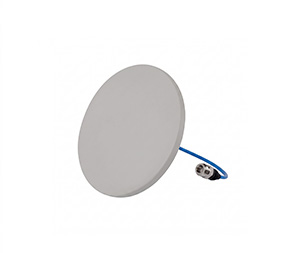
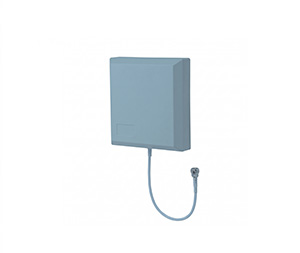
When designing an In-Building System (IBS), choosing between antenna form factors is critical. A ceiling antenna—such as this siso ceiling antenna—is mounted overhead and radiates RF energy downward in a 360-degree, omnidirectional pattern. It is ideal for open floor plans or central room placements to provide a broad umbrella of coverage. Conversely, a directional panel antenna is typically wall-mounted and focuses the RF signal tightly in one direction (e.g., down a long corridor), offering higher gain over a narrower, targeted sector.
The Difference and Advantage of Two Polarization Antennas
Radio frequency polarization dictates the orientation of the transmitted waves.
Vertical vs. Horizontal: A vertically polarized antenna (like the BRA380) aligns its signal perpendicular to the floor, which is the exact orientation of most smartphones held by users, ensuring a naturally strong connection. Horizontal polarization (like the BRTX) pushes waves parallel to the floor, which can navigate uniquely around certain indoor obstacles.
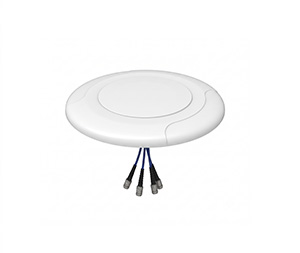
The Dual Advantage: Upgrading a network with a dual polarized ceiling antenna combines both horizontal and vertical streams simultaneously. This drastically reduces signal fading and multi-path interference, doubling the data capability and ensuring user devices latch onto the strongest possible signal regardless of how the device is held or rotated.
Reviews
There are no reviews yet.