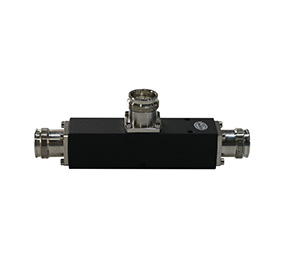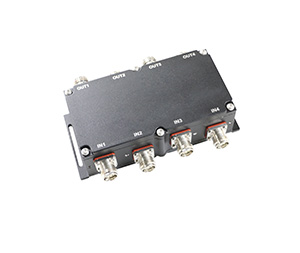
Global telecommunications integrators are currently navigating an unprecedented era of infrastructure evolution. The physical layer of network architecture is being asked to handle exponentially more data, broader frequency ranges, and denser multi-operator deployments than ever before. In the specialized realm of In-Building Systems (IBS) and Distributed Antenna Systems (DAS), the transition from legacy networks to advanced protocols requires passive components that refuse to compromise on operational performance. Whether deploying commercial networks across European metropolitan centers or upgrading critical municipal infrastructure in North America and Australia, engineers require hardware that guarantees absolute reliability.
At the core of these complex signal routing and distribution architectures lies the 3db hybrid coupler. This fundamental passive device is responsible for combining and splitting RF signals efficiently, dictating the overall integrity of the network downstream. As we at BRI Electronic & Technology Co., Ltd. continue to expand our global distribution network and supply industry-leading passive RF components, we recognize that standard hardware must evolve to meet modern demands.
Our newest solution, the 300W 2:2 hybrid combiner, represents a monumental technological leap over traditional legacy components. This article provides an extensive, in-depth technical comparison of our new wideband hybrid coupler against standard industry units, exploring exactly why its specifically engineered parameters—such as an ultra-wide frequency range , exceptional VSWR , ultra-low PIM, and modernized connectors—are non-negotiable for the successful co-deployment of modern TETRA and 5G systems.
A Paradigm Shift: The New 2×2 Hybrid Coupler vs. Traditional Models
Traditional passive couplers have historically forced network engineers to accept difficult compromises: they either had to sacrifice wideband performance in exchange for better isolation, or they had to accept higher passive intermodulation (PIM) levels to achieve higher power handling capabilities.
Our new 2×2 hybrid coupler effectively eliminates these historical compromises, offering a no-compromise solution for modern IBS applications. Designed with a coupling value of 3.05±0.7 dB and an impedance of 50 ohm, it provides a highly stable platform for signal combination. Below is a comprehensive, detailed comparison of how our latest model vastly outperforms legacy couplers across several critical RF parameters.
1. Conquering Signal Reflection: Exceptional VSWR (≤ 1.25)
Voltage Standing Wave Ratio (VSWR) is a paramount metric measuring how efficiently radio-frequency power is transmitted from a power source, through a transmission line, and into the coupler. A lower VSWR means less power is reflected back toward the source amplifier. Traditional wideband couplers frequently struggle to maintain a flat, consistent VSWR across their entire operating frequency spectrum, often settling for baseline values around 1.35 or even 1.50 at the edges of their frequency bands. This baseline leads to increased signal reflection, which generates excess heat, reduces overall system efficiency, and can potentially damage sensitive upstream transmission equipment.
Our new coupler boasts an exceptionally low VSWR of < 1.25. Paired with a rigorous return loss specification of ≥19.1 dB, this ensures that nearly all the input RF power is successfully transferred through the device rather than being reflected back. This near-ideal VSWR translates directly to a lower insertion loss and vastly superior network stability, ensuring that integrators can trust the physical layer to perform under heavy operational loads.
2. Ensuring Signal Integrity: High Isolation (≥ 30 Target)
Isolation is the crucial measure of how effectively the hybrid coupler combiner prevents independent signals from leaking between ports that must remain electrically separated (such as the two primary input ports of a combiner). Poor isolation inevitably leads to crosstalk, interference, and dangerous intermodulation distortion, where one transmitter’s signal feeds back into another transmitter.
Older, legacy couplers generally only offer isolation in the realm of 20 dB to 25 dB. This is simply insufficient for dense, modern deployments where multiple high-power carriers are co-located. Across its massive operational frequency range, our new coupler targets a high isolation standard of ≥ 30 dB for premium system-level design, and absolutely guarantees an isolation rating of > 29 dB in all conditions. This exceptional metric easily meets the rigorous operational requirements specified for high-density, multi-operator DAS sites. It ensures impeccably clean signal combining, protecting the integrity of upstream amplifiers and preserving the clarity of the broadcasted spectrum.
3. The True Wideband Advantage: 380-3800MHz for TETRA and 5G
One of the most significant, crippling limitations of legacy RF couplers is their narrow frequency focus. Historically, an IBS network operator might need to deploy one completely separate set of passive hardware for a 400 MHz TETRA public safety network, another separate set for a 1800 MHz LTE commercial network, and yet another infrastructure overhaul for a 3.5 GHz 5G C-band rollout. This fragmentation multiplies equipment costs, labor, and physical space requirements inside already cramped telecommunications closets.
Our device is engineered as a true, uncompromised wideband solution, featuring a wide frequency band covering 380-3800MHz. This expansive operational bandwidth is a game-changer. It means a single, unified hardware deployment can simultaneously support low-band, mission-critical TETRA / Emergency Responder Radio Coverage Systems (ERRCS), mid-band traditional cellular communications, and high-capacity Sub-6 GHz 5G applications. By bridging these spectrums, integrators can future-proof their in-building environments while dramatically reducing overall capital expenditure.
4. Eradicating Interference: Guaranteed Low PIM (-160dBc)
Passive Intermodulation (PIM) is arguably the greatest threat to modern, high-capacity wireless networks. When multiple high-power RF signals mix within a nonlinear passive component—caused by poor metallurgy, inconsistent plating, or microscopic manufacturing defects—they create “ghost” harmonic signals. These unwanted harmonics raise the noise floor and can completely cripple data throughput by blinding the sensitive uplink receivers of base stations. Traditional components often fail to control PIM under high-power loads, typically maxing out at a mediocre -150dBc.
Our new coupler features guaranteed PIM compliance , specifically engineered and tested to maintain an ultra-low PIM rating of -160dBc@2x43dBm. This stringent -160dBc rating is absolutely essential for complex 5G applications where advanced modulation schemes require the highest possible signal-to-noise ratios. By utilizing this coupler, network operators ensure that their physical infrastructure will not become the bottleneck for digital data speeds.
5. Modernizing the Interface: 4.3-10 Connectors
The physical interface between the coaxial cable and the passive device is a common failure point in legacy infrastructure. Traditional hybrid couplers typically utilize bulky DIN 7/16 connectors or older N-type variants. These legacy interfaces are highly susceptible to torque-related PIM degradation; if they are under-tightened or over-tightened by a technician in the field, the PIM performance of the entire system can fail.
To eliminate this vulnerability, our model features state-of-the-art 4.3/10-female connectors. The 4.3-10 connector standard was revolutionary because it physically separates the electrical contact plane from the mechanical load-bearing contact plane. This means that the impeccable PIM performance (-160dBc) is absolutely maintained regardless of the exact torque applied during installation. Furthermore, the 4.3-10 standard significantly reduces the overall footprint and weight of the connection interface, allowing for tighter, more efficient equipment layouts.
Technical Specifications Summary
To provide a clear, scannable overview of these sweeping technological advancements, the following table contrasts the general baseline performance of traditional legacy couplers against the specific, guaranteed metrics of our new BRHC-AS38-22-4F160 model.
| Key RF Parameter | Traditional Hybrid Coupler Baseline | Our New 2×2 Hybrid Coupler |
| Operational Frequency | Narrowband (e.g., 698-2700MHz) | 380-3800 MHz
|
| VSWR | 1.35 – 1.50 | < 1.25
|
| Isolation | 20 dB – 25 dB | > 30dB
|
| PIM Rating (2x43dBm) | -150 dBc | -160dBc@2x43dBm
|
| Average Power Rating | 100W – 200W | 300W (average Per Port)
|
| Standard Interface | DIN 7/16 or N-Type | 4.3/10-female
|
| Coupling Value | 3.0 ± 1.0 dB | 3.05 ±0.7 dB
|
| Return Loss | ≥15 dB | ≥ 19.1 dB
|
Uncompromising Mechanical and Environmental Robustness
Beyond flawless RF performance, modern site deployments require hardware that can survive harsh environmental elements without degrading over a long operational lifespan. The physical construction of the passive device is just as important as its electrical design.
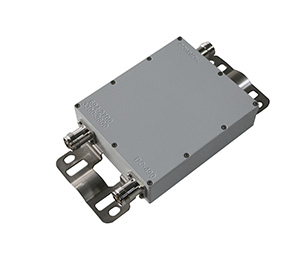
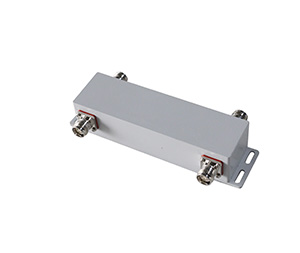
The new 2×2 coupler is housed in a highly durable, precision-machined enclosure finished in a professional grey color. Despite its high power handling capabilities (300W average per port), the device maintains a surprisingly compact form factor. It boasts highly efficient dimensions of 25073.546.5 mm , making it easy to integrate into existing IBS trays and panels, and it weighs an incredibly manageable 2.1 kg. This low weight significantly reduces the mechanical strain placed on mounting brackets and cable assemblies in elevated installations.
Furthermore, the unit is not restricted to climate-controlled environments. It is fully certified for both indoor and outdoor use with a stringent IP65 rating. This ingress protection rating guarantees complete resilience against microscopic dust particles and low-pressure water jets from any direction. The device is rigorously tested and rated to operate seamlessly in extreme thermal environments, featuring an operating temperature range from a freezing -40 °C all the way up to a sweltering +65 °C. This guarantees reliable, uninterrupted service regardless of whether the unit is installed in the freezing conditions of a remote winter cell tower or inside a stifling, non-climate-controlled rooftop enclosure during peak summer.
Conclusion
The demands placed on In-Building Systems are only increasing, and the hardware must rise to meet the challenge. Whether an integrator is deploying brand new, ultra-high-speed 5G infrastructure, or seamlessly shoring up existing, life-saving TETRA public safety networks, our new 2×2 hybrid coupler provides the immense bandwidth, the critical high isolation, the unbeatable VSWR, and the pristine, low-PIM reliability absolutely necessary to support the dynamic future of global telecommunications.