In the modern telecommunications ecosystem, structural connectivity is no longer an optional amenity; it is the critical lifeblood of both commercial enterprise and public safety. With over 80% of all cellular and radio traffic originating or terminating indoors, the physical architecture of a building—replete with concrete, steel, and Low-E glass—poses a formidable barrier to seamless communication. To conquer these challenges, network architects deploy intricate Distributed Antenna Systems (DAS) and Emergency Responder Radio Communication Systems (ERRCS).
At the very core of these complex networks lies a critical, precision-engineered passive component: the hybrid coupler.
As a premier manufacturer and global supplier, Hefei BRI Electronic & Technology Co., Ltd. () stands at the forefront of RF passive component engineering. Designing and manufacturing the foundational hardware for IBS (In-Building Antenna Systems) and public safety networks worldwide, our engineering team understands that the success of a multi-million dollar DAS deployment hinges on the quality of its passive infrastructure. When our team was showcasing our latest generation of DAS solutions to global integrators and network operators at MWC Barcelona in 2026, the overwhelming consensus was clear: as 5G spectrums expand and public safety mandates tighten, the demand for wideband, high-isolation, and ultra-low PIM passive components is absolute.
In this comprehensive, 3500-word technical guide, we will dissect the intricacies of 3db hybrid coupler theory, explore advanced 3db hybrid coupler design, and demonstrate how scaling these components into a 4×4 hybrid matrix revolutionizes neutral-host networks. Furthermore, we will highlight our flagship innovation—the groundbreaking 350-3800MHz hybrid combiner featuring an exceptional 28dB high isolation and ultra-lower insertion loss—and explain why partnering with a premier china rf hybrid coupler manufacturer is the key to future-proofing your wireless infrastructure.
1. Demystifying the RF Hybrid Coupler
To the uninitiated, the passive components in a telecom closet might look like simple metal boxes. To the RF engineer, they are complex electromagnetic intersections.
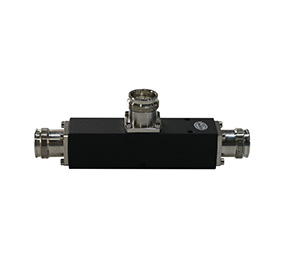
In RF engineering, a standard directional coupler is a passive coaxial device designed to sample high-frequency signals. It takes one signal as the input and supplies two outputs: the main (through) line and the coupled line. Conventional directional couplers typically split power asymmetrically, sending perhaps 90% of the power down the main line while “coupling” 10% for monitoring or localized distribution.
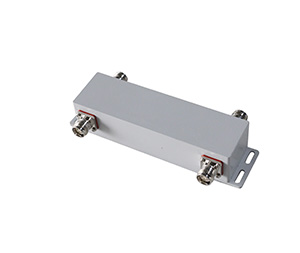
A hybrid coupler, however, is a highly specialized variant. Instead of an asymmetrical split, a hybrid coupler divides the input signal exactly in half, distributing the power evenly between the two output ports. Because halving the RF power equates mathematically to a 3-decibel reduction, these devices are universally recognized in the industry as the 3db hybrid coupler.
The Four-Port Architecture
A standard 3db hybrid coupler is a four-port device. The foundational architecture consists of:
The Input Port (Port 1): Where the primary RF signal (from a BDA or BTS) enters the device.
The Transmitted/Through Port (Port 2 – 0°): Where exactly half of the signal exits.
The Coupled Port (Port 3 – 90° or 180°): Where the other half of the signal exits, accompanied by a specific phase shift.
The Isolated Port (Port 4): A port that is electrically decoupled from the input. In standard applications, this port is terminated with an internal or external 50-ohm load designed to absorb any unwanted signal reflections as heat.
When power is introduced at the input port, half the power (-3dB) flows to the 0° port, and the other half is coupled to the phase-shifted port. The unique electrical symmetry of the device ensures that any reflections caused by impedance mismatches at the output ports (such as a damaged coaxial cable further down the DAS line) are routed directly into the isolated port. This vital mechanism protects highly sensitive and expensive upstream active equipment—like Bi-Directional Amplifiers—from destructive feedback.
2. Deep Dive: 3dB Hybrid Coupler Theory
To maximize the performance of a multi-carrier DAS, one must understand the physics governing 3db hybrid coupler theory.
The operational magic of a hybrid coupler is born from the principles of constructive and destructive electromagnetic interference. In a traditional hybrid, the internal transmission lines are precisely machined and spaced, crossing over each other over a physical length that corresponds exactly to one-quarter wavelength ($\lambda/4$) of the target center frequency.
When the electromagnetic wave enters the coupler, it splits along two distinct physical paths. Because these paths possess different electrical lengths, the split waves arrive at the output ports at slightly different times, creating a calculated phase shift.
The Physics of Isolation
The true genius of 3db hybrid coupler theory lies in its isolation mechanism. In an ideal hybrid circuit, when a signal is injected into Port 1, it divides equally between Port 2 and Port 3. However, the internal geometry to Port 4 (the isolated port) is designed so that the two split waves arrive exactly out of phase with one another.
When two identical sine waves meet exactly out of phase (a 180-degree difference), their amplitudes cancel each other out completely—a phenomenon known as destructive interference. Consequently, zero RF power reaches the isolated port from the input port. This allows signals to be split or combined while maintaining massive electrical separation between the ports.
While infinite isolation is theoretically possible on a whiteboard, physical manufacturing tolerances, material impurities, and frequency deviations introduce slight imperfections. In the real world, achieving an isolation greater than 20 dB is considered excellent. As we will discuss later, Hefei BRI Electronic’s advanced engineering has pushed this boundary to an astounding 28dB to >29dB in our premium wideband models.
3. The Art of 3dB Hybrid Coupler Design
Theoretical perfection must be meticulously translated into physical reality. At Hefei BRI Electronic, 3db hybrid coupler design is an exact science that blends advanced 3D High-Frequency Structure Simulator (HFSS) software with ultra-precision CNC machining.
Transmission Line Topologies
The internal coupling structure of a hybrid must be chosen based on the system’s power requirements, bandwidth, and operating environment:
Stripline/Microstrip: In these designs, the coupler circuit is etched onto a dielectric printed circuit board (like PTFE/Teflon). While incredibly compact and inexpensive, they suffer from higher insertion loss, are susceptible to dielectric breakdown under high power, and often struggle with severe Passive Intermodulation (PIM).
Air-Dielectric (Cavity) Design: This is the absolute gold standard for enterprise DAS and public safety infrastructure. Using air as the primary dielectric medium, thick, highly conductive inner conductors (usually silver-plated brass or copper) are suspended inside a machined aluminum cavity. This 3db hybrid coupler design eliminates the risks of dielectric heating, allowing the unit to handle hundreds of watts of continuous RF power while maintaining an incredibly low loss hybrid coupler profile.
Conquering Passive Intermodulation (PIM)
In the era of 4G LTE Advanced and wideband 5G, Passive Intermodulation is the mortal enemy of network capacity. PIM occurs when two or more high-power carrier frequencies mix together in a non-linear passive component (such as a poorly soldered joint or a component using ferromagnetic metals). This mixing creates “ghost” signals—spurious emissions that elevate the noise floor and deafen the base station’s highly sensitive uplink receiver.
Designing a world-class china rf hybrid coupler requires fanatical PIM mitigation. At Hefei BRI Electronic, our wideband couplers guarantee exceptional intermodulation performance, consistently testing at $\le-160dBc$ to $-161dBc$ (using $2\times43dBm$ carrier tones). We achieve this through:
The strict elimination of all ferromagnetic materials (such as nickel or steel) from the RF signal path.
The application of premium, high-thickness silver plating on all internal conductors to maximize the “skin effect” of RF conductivity.
The use of seamless, heavy-duty soldering techniques and minimizing mechanical joints.
Robust, IP65-rated environmental sealing to prevent moisture ingress and oxidation, which are notorious for degrading PIM performance over time.
4. Flagship Innovation: The 350-3800MHz Hybrid Combiner with 28dB Isolation
As cellular networks evolve and public safety mandates expand, building owners face a difficult challenge: how do you build a single passive infrastructure that supports legacy UHF public safety radios, modern 700/800MHz ERRCS, and ultra-fast 3.5GHz 5G networks simultaneously?
Hefei BRI Electronic has answered this challenge with our industry-leading 350-3800MHz hybrid combiner.
This component represents the pinnacle of modern 3db hybrid coupler design. Most wideband couplers on the market stretch from 698MHz to 2700MHz. By expanding our operational bandwidth down to 350MHz and up to 3800MHz, this single component covers TETRA, UHF public safety, legacy 2G/3G, 4G LTE, and the crucial 5G C-Band.
The 28dB Isolation Advantage
When acting as a hybrid coupler combiner to merge two different high-power base stations into a single DAS, isolation is the most critical parameter. If isolation is poor, the transmit power from Base Station A will leak backward into the receiver of Base Station B, causing severe intermodulation, equipment damage, and system failure.
Standard industry hybrids offer roughly 20dB of isolation. Our engineered 350-3800MHz hybrid combiner boasts an extraordinary high isolation of 28dB (often testing at >29dB in the 380-3800MHz spectrum). This massive isolation buffer allows system integrators to confidently mix highly disparate networks—even those with competing frequencies—without fear of cross-contamination or hardware damage.
Unprecedented Lower Insertion Loss
Alongside high isolation, this flagship model features an incredibly lower insertion loss profile. In an ideal world, a 2:2 hybrid combiner has a theoretical split loss of 3.0dB. Real-world physics usually adds 0.6dB to 1.0dB of dissipative loss on top of that.
Through optimized cavity matching, precision silver-plating, and a guaranteed VSWR of $<1.25$, our 350-3800MHz hybrid combiner minimizes dissipative losses to the absolute theoretical floor (e.g., $3.05 \pm 0.7$ dB). This efficiency preserves precious RF power, ensuring that every possible milliwatt reaches the indoor antennas, thereby extending the coverage footprint of the DAS and reducing the need for expensive, active booster amplifiers downstream.
5. Phase Dynamics: 90-Degree vs. 180-Degree Hybrid Couplers
Hybrid couplers are broadly classified by the specific phase difference they introduce between their two output ports. Understanding when to use which is the hallmark of an expert RF architect.
The 90° Hybrid Coupler (Quadrature Coupler)
A 90° Hybrid Coupler is a four-port device that equally splits an input signal with a 90° phase shift between the resulting output ports. A signal applied to the input port is divided perfectly, with half the power flowing to the 0° port and the other half flowing to the 90° port.
These devices are frequently referred to as quadrature hybrids because the output signals are one quadrant (90°) apart.
DAS Applications:
The 90° coupler is the workhorse of the DAS industry. It is widely used to split signals evenly down two different building risers. Because of the 90-degree phase relationship, any reflections that bounce back from a damaged coaxial cable or mismatched antenna on Floor 3 will travel back through the coupler, undergo another phase shift, and cancel out at the input port, safely dumping the reflected power into the isolated load. This protects the head-end equipment from VSWR alarms.
The 180° Hybrid Coupler (Rat-Race Coupler)
A 180° Hybrid Coupler is uniquely structured. It provides two inputs and two outputs. Depending on which input port is utilized, the two output signals will either be perfectly in-phase (0° difference) or perfectly out-of-phase (180° difference).
Often referred to as a “rat race coupler,” traditional 180° hybrids consisted of a center conductor ring with a circumference of 1.5 times the wavelength.
Developing a broadband 180 hybrid coupler is a masterclass in RF engineering. Unlike a narrow-band rat-race ring, a broadband 180-degree hybrid utilizes complex, cascaded asymmetric coupled lines to maintain a precise 180-degree phase shift across vast frequency ranges (such as 698-3800MHz).
DAS Applications:
A broadband 180 hybrid coupler is exceptionally useful in advanced antenna arrays and push-pull amplifier designs. When used as a combiner, the 180-degree phase isolation provides superior separation between two transmitters operating on very close or identical frequencies, making it a powerful tool in complex, high-density RF environments.
6. Scaling the Network: Matrices and Multi-Network Combiners
In modern commercial real estate, a DAS is rarely deployed for a single mobile operator. Today’s standard is the “Neutral Host” DAS—a system designed to allow multiple competing carriers (e.g., AT&T, Verizon, T-Mobile, Vodafone) and Public Safety bands to share the exact same coaxial infrastructure and indoor ceiling antennas.
To accomplish this, engineers cannot simply splice the cables from the different base stations together; the transmitters would severely interfere with one another. Instead, they scale individual hybrid couplers into complex matrices.
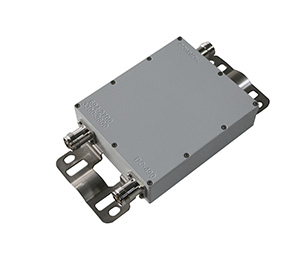
The 2×2 Hybrid Coupler
A 2×2 hybrid coupler is essentially the standard 4-port device packaged for a specific combining application. It takes two distinct inputs (for example, Carrier A and Carrier B) and merges them. The output is two identical ports, each containing exactly half of Carrier A’s power and half of Carrier B’s power.
The Advantage: Both operators are perfectly blended while maintaining massive isolation (like the 28dB+ offered by our 350-3800MHz model) from one another. The two identical outputs can then be routed to the East and West towers of a commercial complex.
The 3×3 Hybrid Matrix
As network demands increase and more inputs are required at the Point of Interface (POI), engineers turn to the 3×3 hybrid matrix. This sophisticated passive component accepts three different inputs and distributes them equally across three distinct outputs.
Hefei BRI Electronic’s 3×3 matrices (such as our robust BRHC series) operate flawlessly across wide bands with power ratings up to 300W or 500W average per port. By utilizing an internal network of precise couplers and phase shifters, a 3×3 hybrid matrix ensures that Carrier A, Carrier B, and Carrier C are blended evenly across three separate building sectors without interference.
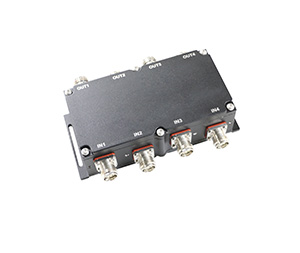
The 4×4 Hybrid Coupler and Matrix
The absolute pinnacle of neutral-host DAS combining is the 4×4 hybrid matrix (often referred to simply as a 4×4 hybrid coupler or a Multi-Network Combiner).
Internally, a 4×4 hybrid matrix consists of four separate 3dB 90° hybrid couplers meticulously wired together in a specific topology known as a Butler matrix.
The Inputs: It accepts up to four different high-power base station inputs (e.g., four different cellular carriers, or four different MIMO sectors of a 5G network).
The Outputs: It provides four separate outputs.
The Result: Every single output port contains exactly 25% (a theoretical 6dB split loss) of the power from Input 1, Input 2, Input 3, and Input 4.
The 4×4 hybrid coupler is the undisputed backbone of advanced multi-operator passive and hybrid DAS networks. It allows system integrators to plug all the carriers into a single master component, perfectly mix the signals with high isolation ($\ge 18dB$ to $25dB+$), and distribute those four blended, wideband outputs to four different vertical risers in a skyscraper.
Hefei BRI Electronic manufactures state-of-the-art 4×4 hybrid couplers supporting ultra-wideband frequencies from 617-5925MHz. With guaranteed VSWR of $\le 1.3$ and extraordinary PIM control ($\le -160dBc$), our 4×4 matrices are deployed in some of the most demanding RF environments on the planet.
7. The Power of the Hybrid Coupler Combiner
While we frequently discuss couplers in terms of “splitting” power, it is vital to remember that passive RF devices are completely reciprocal. They work equally well in reverse. When two distinct signals are fed into the output ports, they combine and exit the input ports. In this application, the device acts as a hybrid coupler combiner.
Why Use a Hybrid Coupler Combiner Over a Diplexer?
There are multiple ways to combine RF signals at the head-end of a DAS. A diplexer uses frequency-based bandpass filters to merge signals. Diplexers are excellent, but they have a massive limitation: they can only combine signals that have vastly different frequencies (e.g., combining a 700MHz signal with a 2100MHz signal).
If you attempt to combine two signals that are on the exact same frequency band (for instance, two different UHF public safety repeaters, or two sectors of the same LTE band), a diplexer cannot filter them.
A hybrid coupler combiner, however, does not rely on frequency filtering; it relies on phase cancellation. Therefore, a hybrid combiner can safely merge two transmitters operating on the exact same frequency band while providing high isolation between them. This prevents the signal from Transmitter 1 from leaking backward into Transmitter 2 and causing destructive intermodulation.
The trade-off for this capability is insertion loss. Combining two signals in a hybrid inherently results in a 3dB loss of each signal, which is dissipated as heat in the internal isolated load. This fundamental law of physics is exactly why sourcing a low loss hybrid coupler from Hefei BRI Electronic is paramount; if your component has poor internal conductivity, you will lose significantly more than the theoretical 3dB, crippling your transmission power.
8. The Crucial Need for a Low Loss Hybrid Coupler in Public Safety
While commercial cellular DAS ensures high-speed data for consumer smartphones and seamless video conferencing for enterprise tenants, a Public Safety DAS (ERRCS) is literally a matter of life and death. First responders—police, fire, and EMS—rely on critical communication networks (typically 700/800 MHz, VHF, and UHF) that must reliably penetrate deep into concrete basements, heavily shielded stairwells, and elevator shafts during extreme emergencies.
In an ERRCS deployment, the RF “link budget” of the building must be meticulously calculated. Every single fraction of a decibel matters. The radios carried by firefighters transmit at a fraction of the power of a commercial cell tower. If the building’s passive infrastructure introduces too much attenuation, the distress call from a firefighter deep inside the structure will not possess the strength to push through the cables, pass through the splitters, and reach the donor antenna on the roof.
Hefei BRI Electronic engineers every component to be the ultimate low loss hybrid coupler solution. By utilizing precision-machined air-cavities, high-purity silver plating, and meticulous port impedance matching, our couplers ensure that the insertion loss above the theoretical split is kept to absolute minimums.
Particularly with our 350-3800MHz hybrid combiner, the lower insertion loss profile combined with its ability to cleanly pass lower-frequency UHF public safety bands makes it the definitive choice for hybrid commercial/ERRCS deployments. This efficiency maximizes the coverage footprint of your public safety network, drastically increasing the reliability of mission-critical voice communications when seconds count.
9. Hefei BRI Electronic: Your Premier China RF Hybrid Coupler Manufacturer
The global telecommunications market is heavily saturated with low-cost, mass-produced RF components that look identical on a spec sheet but fail catastrophically in the field. For system integrators, EPCs, and building owners, choosing the wrong passive hardware can lead to failed commissioning tests, carrier rejection due to high PIM, and ultimately, a system that must be torn out and completely replaced at a massive financial loss.
When your network demands absolute reliability, Hefei BRI Electronic & Technology Co., Ltd. () is the industry’s trusted partner.
Why Partner with Us?
The 350-3800MHz Advantage: Our flagship hybrid combiner bridges the gap between legacy public safety and the 5G future. Offering a massive 28dB to >29dB of isolation and ultra-lower insertion loss, it is a marvel of modern RF engineering that simplifies complex multi-band deployments.
Uncompromising Low PIM: We guarantee our components will not generate the intermodulation noise that destroys network data speeds. With ratings of $\le -160dBc$ to $-161dBc$, our products meet the strictest carrier requirements globally.
Complete In-House Manufacturing: From the initial 3D electromagnetic simulation of the 3db hybrid coupler design to precision CNC machining, silver plating, and final network analyzer testing, we control the entire quality chain in our state-of-the-art Chinese manufacturing facility.
Comprehensive Portfolio: Whether your blueprint calls for a standard 2×2 hybrid coupler, a complex 3×3 hybrid matrix, a massive neutral-host 4×4 hybrid matrix, or a highly specific broadband 180 hybrid coupler, we manufacture the exact topologies required.
Built for the Elements: Our components are housed in robust, IP65-rated enclosures with wide operating temperature ranges ($-40^{\circ}C$ to $+65^{\circ}C$ and beyond), ensuring they survive both the sweltering heat of a rooftop and the damp chill of an industrial basement.
10. Conclusion: The Invisible Foundation of Global Connectivity
A Distributed Antenna System is an intricate puzzle—a delicate, highly-tuned balance of active bi-directional amplifiers, fiber optic transport layers, and miles of coaxial cabling. Yet, the entire system’s ability to smoothly distribute RF power, safely isolate competing multi-megawatt transmitters, and maintain precise phase integrity relies squarely on the humble hybrid coupler.
Understanding 3db hybrid coupler theory reveals that these devices are not mere metal splitters; they are precision-engineered electromagnetic intersections. Whether you are leveraging a hybrid coupler combiner to merge critical public safety repeaters, or utilizing a massive 4×4 hybrid coupler to blend the signals of four different cellular giants into a neutral-host skyscraper, the quality of your coupler dictates the ultimate quality of your coverage.
Do not let substandard passive components be the bottleneck of your next DAS deployment. Insist on a low loss hybrid coupler that guarantees low PIM, high isolation, and wideband 5G performance.
Ready to elevate your network infrastructure to the next level? Visit today to explore our industry-leading portfolio of RF passive components. Partner with Hefei BRI Electronic, and let our flagship 350-3800MHz combiners provide the high-performance china rf hybrid coupler solutions that will keep your buildings connected, your enterprise tenants productive, and your first responders safe for decades to come.