1. Introduction: The Evolution of In-Building Distributed Antenna Systems
As mobile traffic migrates indoors—with estimates suggesting over 80% of data consumption occurs within buildings—the demand for robust indoor distributed antenna systems has reached a critical peak. Modern architecture, characterized by Low-E glass and reinforced concrete, acts as an RF shield, necessitating a dedicated cellular distributed antenna system to ensure connectivity.
In 2026, the transition to 5G distributed antenna systems introduces new complexities. Higher frequency bands, such as C-Band and mmWave, require a precision-engineered passive layer to maintain signal integrity. This article explores the critical role of passive components—POI, duplexers, tappers, splitters, and antennas—in building a future-proof network.
2. Head-End Management: POI, Combiners, and Duplexers
The “Head-End” is the point of entry where carrier signals are conditioned for distribution. This stage is vital for a multi-carrier in-building distributed antenna system.
Point of Interface (POI) & Combiners
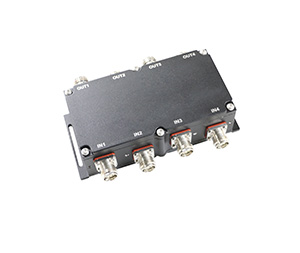
The POI acts as the system’s brain. It aggregates multiple RF sources from various service providers into a single distribution path.
Application: Our POIs provide high isolation ($>50$ dB) to prevent “near-far” interference and inter-operator crosstalk.
5G Integration: They are wideband-ready, supporting everything from legacy 700 MHz to 3500 MHz (C-Band).
The RF Duplexer
A Duplexer allows for simultaneous transmission (Tx) and reception (Rx) over a single coaxial line.
Critical Use: In Public Safety applications, duplexers ensure that emergency responder radios can transmit and receive without desensitizing the base station receiver.
3. Signal Distribution Logic: Power Splitters vs. Tappers
Efficient signal distribution in a 5G distributed antenna system requires balancing the “Link Budget” across multiple floors.
Power Splitters (Equal Division)
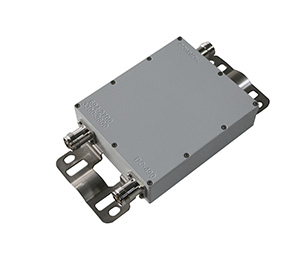
A Power Splitter divides input energy equally between output ports.
When to use: Ideal for symmetrical floor plans where cable runs to antennas are of equal length.
PIM Focus: Our splitters are rated for Low-PIM ($-161$ dBc) to ensure they don’t generate interference at high power levels.
RF Tappers (Unequal Division)
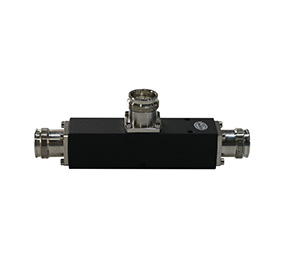
Tappers are the backbone of high-rise risers. They “tap off” a small portion of signal for one floor while passing the majority down the line.
Application: On a 10-story building, you use a 15dB Tapper on the first floor (closest to the source) and a 2-way Splitter on the final floor. This ensures the user on floor 1 and floor 10 receives the same signal strength.
4. Signal Precision: Directional Couplers
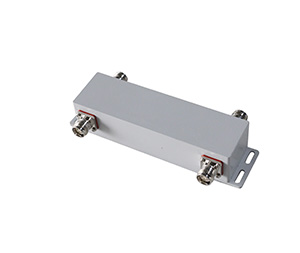
While tappers are used for power distribution, Directional Couplers are used for precision monitoring and sampling.
Function: They sample a portion of the signal in a specific direction with high directivity.
Application: Essential for “leakage” testing and real-time system performance monitoring without interrupting user service.
5. The Interface: Wideband and MIMO Antennas
The antenna is the final point of contact in an indoor distributed antenna system.
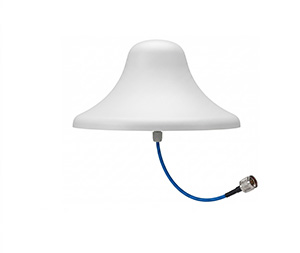
Omni-Directional Antennas: Best for open-plan offices, providing $360^{\circ}$ horizontal coverage.
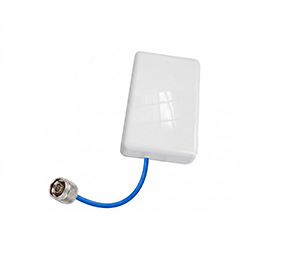
Directional Panel Antennas: Ideal for long hallways, parking garages, or “illuminating” specific dead zones from a wall mount.
MIMO (Multiple Input, Multiple Output): To achieve 5G’s gigabit speeds, 2×2 or 4×4 MIMO antennas are required. Our antennas integrate multiple elements to provide high-capacity data streams in a single low-profile housing.
6. Connectivity: The 4.3-10 Standard and Low-PIM Connectors
The most common point of failure in a cellular distributed antenna system is the connection point.
Why 4.3-10?
The traditional N-Type connector is sensitive to torque. If it is slightly loose, it generates Passive Intermodulation (PIM). The 4.3-10 connector separates the electrical and mechanical planes, ensuring a PIM-stable connection even if hand-tightened.
Our Standard: All our passive components utilize 4.3-10 interfaces to guarantee PIM ratings of $<-161$ dBc, which is the gold standard for 5G distributed antenna systems.
7. Strategic Advantages of Passive Components
| Component | Primary Function | Advantage in 5G |
| POI | Carrier Aggregation | Eliminates interference between operators. |
| Tapper | Riser Distribution | Ensures uniform signal in high-rise buildings. |
| Splitter | Signal Splitting | Maintains balance in symmetrical layouts. |
| 4.3-10 Connector | Signal Integrity | Minimizes PIM-related data slowdowns. |
| Wideband Antenna | Final Broadcast | Supports frequencies from 600MHz to 6GHz. |
8. Conclusion: Building a Future-Proof Network
The passive layer of an in-building distributed antenna system is an investment meant to last decades. While active radios will be upgraded as technology shifts from 5G to 6G, a high-quality passive infrastructure using Low-PIM splitters, tappers, and POIs will remain transparent and capable.
By prioritizing components that exceed standard RF requirements, building owners and engineers can guarantee a high-quality user experience with maximum throughput and minimum maintenance.