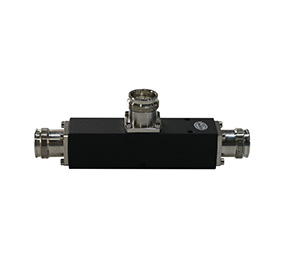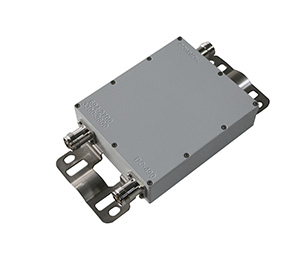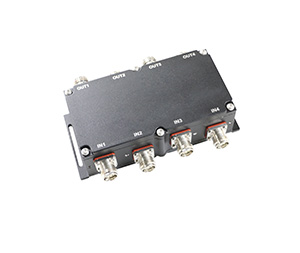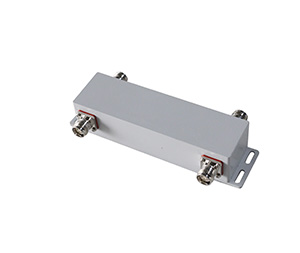
The Definitive Guide to RF Diplexers: Maximizing 5G 3800MHz and IBS Performance
In the modern telecommunications era, the “spectral real estate” inside a building or atop a macro site is incredibly crowded. With the introduction of 5G NR (New Radio), particularly in the 3.5GHz to 3.8GHz bands, operators face a daunting challenge: how to add more capacity without adding more expensive cabling and antenna infrastructure.
The solution is the RF diplexer.
As a premier manufacturer of RF passive components, Hefei BRI understands that a diplexer isn’t just a box; it is a precision-engineered filter system that protects your network’s signal-to-noise ratio. This guide explores everything from basic mechanics to high-level rf diplexer design and the necessity of high power rf diplexer solutions in the 5G age.
1. What is an RF Diplexer? Defining the 3-Port Essential
At its core, an rf diplexer is a passive device that implements frequency-domain multiplexing. It features three ports: a Common Port, a Low-Band Port, and a High-Band Port. Its primary function is to allow two different frequency bands to share a single transmission line (like a 7/8″ coaxial cable) or a single antenna without interfering with one another.
The Difference Between a Diplexer and a Splitter
Many junior engineers mistake a diplexer for a simple power splitter. While a splitter divides power equally across a frequency range, it offers no frequency selectivity. A diplexer, however, uses highly selective filtering to ensure that energy from the Low-Band port only goes to the Common port, and energy from the High-Band port only goes to the Common port—with virtually zero leakage between the Low and High ports.
2. The Science of RF Diplexer Design
Effective rf diplexer design relies on the sophisticated manipulation of electromagnetic waves. To prevent interference, the design must incorporate two distinct filter paths:
The Low-Pass Filter (LPF): This allows lower frequencies (e.g., 698-960 MHz) to pass through to the Common port while providing massive “rejection” (blocking) of high-frequency signals.
The High-Pass Filter (HPF): This allows high frequencies (e.g., 1710-3800 MHz) to pass while blocking the low-band noise.
Cavity vs. Ceramic Design
At Hefei BRI, we focus on cavity diplexer construction. Unlike smaller ceramic filters used in handsets, cavity diplexers utilize high-precision machined aluminum chambers plated with silver. This design offers:
Ultra-Low Insertion Loss: Silver plating reduces surface resistance, ensuring more power reaches the antenna.
High Rejection: The physical size of the cavities allows for sharper “skirts” in the frequency response, which is vital for 5G 3800MHz applications where guard bands are narrow.
3. The Necessity of a Custom RF Diplexer for 5G 3800MHz
The transition to 5G NR, specifically the n78 band (3300-3800MHz), has created unique interference scenarios. Standard off-the-shelf components often fail to meet the rigorous rejection requirements of modern multi-operator environments.
This is where a custom rf diplexer becomes a strategic asset. In many Neutral Host IBS deployments, multiple carriers (e.g., Vodafone, Orange, and T-Mobile) share the same distributed antenna system. Each operator has a specific frequency block. A custom-tuned diplexer ensures that:
The 5G 3800MHz signal does not “desensitize” the 4G LTE receivers in the 1800MHz or 2100MHz bands.
The Passive Intermodulation (PIM) is kept below -161 dBc to prevent background noise from drowning out weak user signals.
4. Engineering for Reliability: The High Power RF Diplexer
In macro-cell deployments and high-capacity stadium IBS, components are subjected to immense stress. A high power rf diplexer must handle not only the continuous wave (CW) power from the base station but also the high peak-to-average power ratios (PAPR) of 5G signals.
Thermal Management
Power that isn’t radiated is converted into heat. If a diplexer has poor insertion loss, it will heat up. This thermal expansion can shift the filter’s center frequency, causing the VSWR to spike and the system to fail. Hefei BRI utilizes advanced thermal modeling to ensure our high-power units (often rated for 200W to 500W per port) remain stable even in the harshest outdoor environments.
5. Key Metrics: The “Golden Four” of Diplexer Performance
When reviewing specifications for your next project, these four parameters dictate the success of your network:
Insertion Loss (IL): Ideally < 0.5 dB. High IL leads to shorter battery life for user devices and smaller coverage footprints.
Isolation: Typically > 50 dB. This is the “wall” that prevents one frequency from bleeding into the other.
Return Loss (VSWR): A VSWR of < 1.25:1 is the benchmark for high-performance IBS components.
Passive Intermodulation (PIM): In the world of 5G, a PIM rating of -161 dBc (2×43 dBm) is essential for maintaining data throughput speeds.
6. Manufacturing Excellence at Hefei BRI
As a leader in the RF passive industry, Hefei BRI Electronic & Technology Co., Ltd. combines rigorous ISO-certified manufacturing with cutting-edge R&D. Our facility in Hefei, China, utilizes:
Automated VNA Testing: Every diplexer is 100% tested across its full temperature range using high-end Vector Network Analyzers.
Silver Plating Precision: Our proprietary plating process ensures the lowest possible PIM and insertion loss.
Customization Speed: Because we control the full design and machining process, we can deliver a custom rf diplexer prototype in a fraction of the time of our competitors.
7. Interactive Performance Lab: Visualizing Signal Separation
To help you understand how your specific frequency plan will interact with a diplexer, we have provided an interactive simulation tool. This allows you to visualize how isolation and insertion loss change based on the proximity of your Low-Band and High-Band signals.
RF Diplexer Simulation Tool
Select Your Bands: Choose from standard configurations like 900/1800 MHz or create a custom 5G 3800MHz scenario.
Adjust the Rejection Skirt: See how a “sharper” filter (High Q) improves isolation but might slightly increase insertion loss.
Evaluate PIM & Power: Input your expected transmit power to see the thermal and noise floor impact.
8. Conclusion: Choosing the Right Partner for the 5G Future
The rollout of 5G 3800MHz is a transformative moment for global connectivity, but it requires a foundation of high-quality passive infrastructure. A poorly designed diplexer can become the bottleneck that degrades an entire multi-million dollar IBS installation.
By prioritizing rf diplexer design that emphasizes low PIM, high isolation, and thermal stability, you ensure your network is ready for the demands of the next decade. At Hefei BRI Electronic & Technology Co., Ltd., we don’t just sell components; we provide the engineering expertise that keeps the world connected.
Contact our sales team today to discuss your custom RF diplexer requirements and see how we can optimize your 5G 3800MHz deployment.